Camino de Santiago Guide: Everything Beginners Need to Know (2026)
This Camino de Santiago guide covers everything a first-timer needs to know. You’ve heard the name. Maybe a friend walked it, or you stumbled across a documentary, or something in you has been quietly pulling you toward it for years. Whatever brought you here – welcome.
Having walked three Camino routes – the Francés, the Norte, and the Português – I’ve found that each time, I arrive in Santiago having left something behind and learnt something new. This guide is built on experience: not just research, but the kind of knowledge that only comes from walking it.
Camino de Santiago Guide: First, what is it?
The Camino de Santiago – or the Way of St. James – is a network of ancient pilgrimage routes that all lead to the Cathedral of Santiago de Compostela in Galicia, northwest Spain. According to tradition, the cathedral holds the remains of the apostle Saint James, making it one of the most important pilgrimage destinations in the Christian world. Each year, over 400,000 people officially complete the Camino and receive their Compostela certificate, and millions more walk sections of it.
But you don’t have to be religious to walk the Camino. Today, pilgrims come from every corner of the world and every walk of life – some seeking spiritual connection, others personal challenge, grief, clarity, adventure, or simply the joy of walking through beautiful countryside. No matter your purpose or where you come from, the Camino meets you where you’re at.
The Main Camino Routes: Which One Is Right for You?
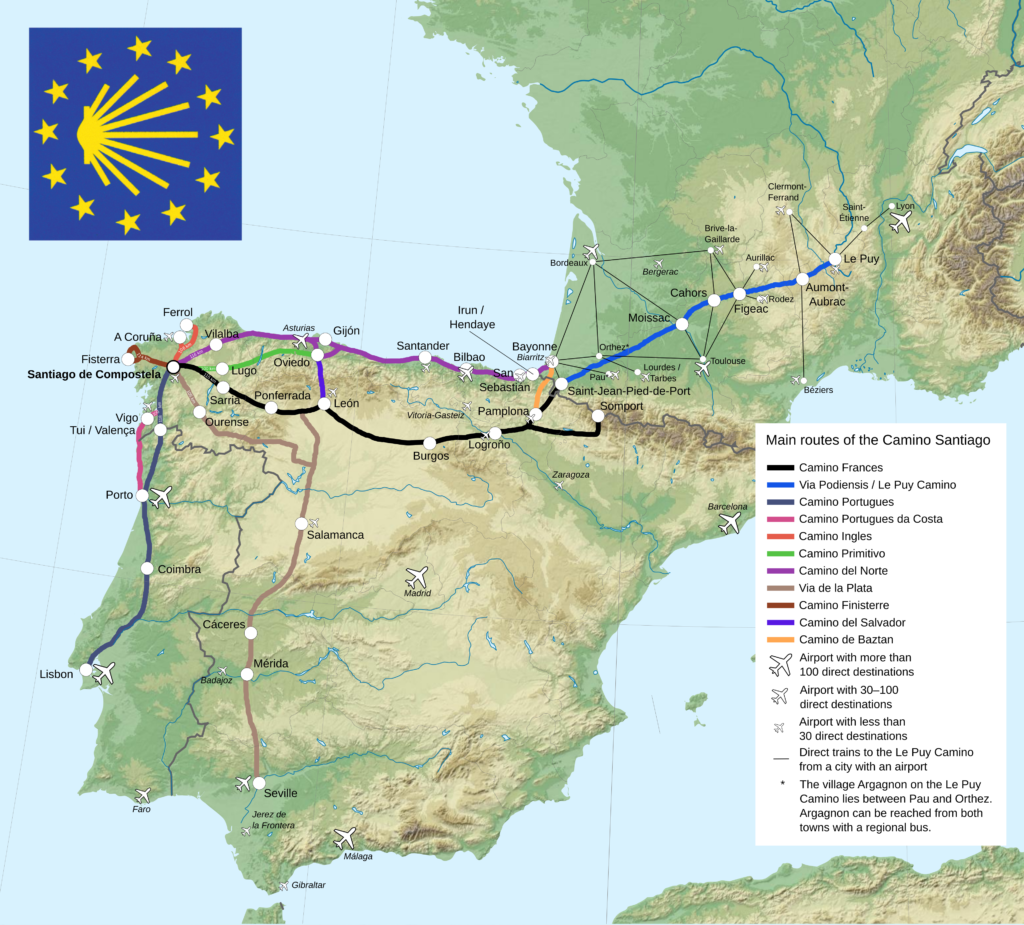
There isn’t just one Camino – there are dozens of official routes, each with its own character, difficulty, and scenery. Below, I cover the most popular.
Camino Francés (French Way)
The classic. Starting from Saint-Jean-Pied-de-Port in France (or Pamplona for a shorter version), the Francés covers around 780km across northern Spain. It’s the most walked route, which means excellent infrastructure, plenty of fellow pilgrims, and a well-marked path. The trade-off: it can feel busy in peak season. It is great for first-timers who want company and good support along the way.
Camino Português (Portuguese Way)
Starting from Lisbon (620km) or Porto (240km), the Português is the second most popular route and growing fast. It passes through charming Portuguese towns and lush Galician countryside, with a beautiful coastal variant along the Atlantic. Less crowded than the Francés, more intimate, and arguably more beautiful in stretches.
The Camino Português from Porto is the route I’d recommend most readily to a first-timer – a manageable length of 10-12 days, stunning scenery, wonderful food.
Explore the Camino Português in our complete guide: Camino Português — Everything You Need to Know.
Camino del Norte (Northern Way)
Hugging the rugged Cantabrian coastline from Irún on the French border, the Norte is wilder, hillier, and more remote than the Francés. It features stunning coastal scenery and far fewer pilgrims, which make it a favourite for experienced walkers seeking solitude. That said, infrastructure is thinner, so it requires a bit more planning.
Camino Primitivo (Original Way)
The oldest Camino route, starting in Oviedo. Remote, challenging, and breathtakingly beautiful through the Asturian mountains. Not recommended as a first Camino given the difficulty and limited services, but deeply loved by experienced pilgrims.
Camino Inglés (English Way)
One of the shortest official routes, starting from Ferrol or A Coruña – 75–120km depending on your starting point. This is popular with those short on time as it can be completed in 3-6 days, and is an excellent option to combine with a city break in A Coruña.
When Is the Best Time to Walk the Camino?
The Camino can be walked year-round, but the experience varies dramatically by season:
- Spring (April–June): The sweet spot for most pilgrims. Mild temperatures, wildflowers in bloom, manageable crowds. May and early June are arguably the best weeks of the year.
- Summer (July–August): Peak season. Hot, busy, and albergues fill up fast – especially on the Francés. Book ahead if walking in August. The energy is festive but it can feel crowded.
- Autumn (September–October): A favourite among experienced pilgrims. Cooler temperatures, beautiful autumn colours, and fewer crowds than summer – but still plenty of company.
- Winter (November–March): Quiet, raw, and deeply atmospheric. Some albergues close, and rain is frequent in Galicia. I walked the Português in March and found it profoundly peaceful – but it’s not the easiest introduction for a first-timer.
How Long Does the Camino Take?
It depends entirely on which route you choose and your starting point. Here’s a rough guide:
| Route | Approximate Duration |
| Camino Francés (full, from Saint-Jean-Pied-de-Port) | 30–35 days |
| Camino Português (from Lisbon) | 25–30 days |
| Camino Português (from Porto) | 10–12 days |
| Camino del Norte | 35–40 days |
| Camino Inglés (from Ferrol) | 5–6 days |
Most pilgrims walk 20–25km per day, though there’s no rush. The Camino has a way of setting its own pace – some days you’ll push further, others you’ll linger over coffee in a village square or tend to an aching ankle. Listen to your body, heart and soul – it’s part of the beauty of the way.
Where Do You Sleep on the Camino?
Accommodation on the Camino is part of the experience. The pilgrim hostel – called an albergue – is the backbone of Camino life. Here’s what to expect:
- Municipal albergues: Run by local councils. The cheapest option at €5–10/night. Basic bunk beds in shared dorms, shared bathrooms, disposable bedding. First come, first served – no advance booking. In peak season on the Francés, start walking early to secure your bed.
- Private albergues: More comfortable, often with smaller dorms and proper bedding. €15–30/night. Many allow advance booking – worth it in peak season.
- Pensiones / private rooms: For when you need a proper night’s sleep. €30–55/night. Ideal for rest days or when you’ve earned a little comfort.
- Hotels: Available in larger towns. €60–150+/night. Rarely the pilgrim’s choice, but useful for rest days or the final night in Santiago.
How Much Does the Camino Cost?
Daily costs can vary widely depending on your budget – here’s a realistic breakdown:
- Budget pilgrim (municipal albergues, eating simply): €30–40/day
- Mid-range (mix of albergues and private rooms, dining out): €50–70/day
- Comfortable (private rooms, restaurants): €80–120/day
You’ll have to factor in costs for gear, flights and insurance as well. For a first-time pilgrim walking the full Camino Francés, a realistic cost estimate – including gear and 33 days on the trail, but excluding flights – is around €1,600–1,800 for a budget-focused approach.
For a full Camino de Santiago guide to costs including breakdown by category, check out How Much Does the Camino de Santiago Cost?
What to Pack: The Golden Rule
The single most important rule: your backpack should weigh no more than 10% of your body weight when fully loaded. For most people, that’s 6–10kg. Everything above that is a burden you’ll regret and start offloading by day three – believe me, I know this from experience!
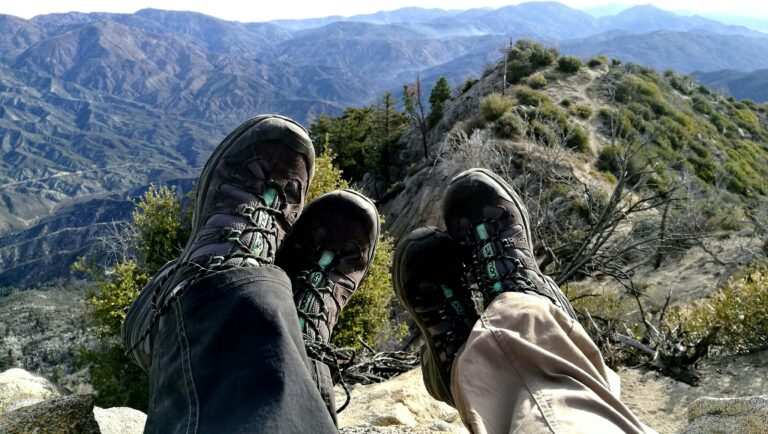
A hot take I’d like to flag upfront: in my opinion waterproof hiking boots, while often recommended, are usually the wrong choice for the Camino. They trap heat and moisture from within, take an eternity to dry when wet, and cause more blisters than they prevent. Light trail runners are almost universally preferred by pilgrims who’ve walked more than one Camino, myself included.
If you’d like more insider tips alongside a full breakdown of everything you need to pack, check out our Camino de Santiago Packing List: The Definitive Guide. It covers everything from footwear and clothing to sleep system, with gear recommendations for different budgets.
How to Train for the Camino
You definitely don’t need to be an athlete to walk the Camino – but you do need to prepare your body, especially your feet. The biggest mistake first-timers make is underestimating the cumulative effect of walking 20km+ every day for weeks on end.
Here’s a simple 8-week plan I can suggest:
- Weeks 1–2: Walk 5–8km two to three times a week in your actual Camino shoes.
- Weeks 3–4: Increase to 10–12km while carrying your loaded backpack
- Weeks 5–6: Two back-to-back walking days with your loaded backpack, 15–18km each day (simulating consecutive Camino stages).
- Weeks 7–8: Taper down. One longer 20km walk mid-week, shorter 5–10km walks otherwise. Let your body consolidate.
Regardless of whether you decide to train or not, please, please: do at least one test walk of 20–30km in a single day in the shoes you plan to bring. You’ll discover any hot spots or fit issues immediately, and it is much better to find out and fix it in your home city than on the trail.
The Pilgrim Passport (Credencial) and the Compostela
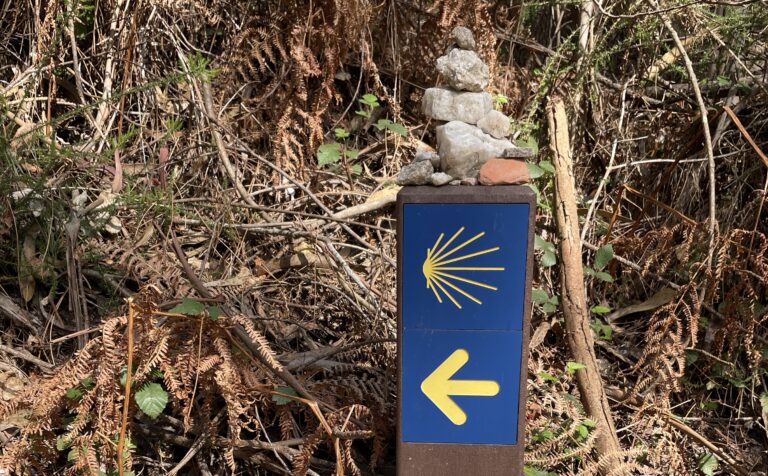
To officially complete the Camino and receive your Compostela certificate, you need a Credencial del Peregrino – the pilgrim passport. This is a folded card you carry throughout your journey and get stamped (sellos) at albergues, churches, cafés, and official pilgrim offices along the way.
To qualify for the Compostela, you must:
- Walk at least the final 100km on foot (200km by bicycle)
- Collect at least two stamps per day for the last 100km
- Present your completed Credencial at the Pilgrim Office in Santiago
You can get your Credencial before you leave from your local Camino society, or pick one up at your starting point – most albergues and churches along the route also have them.
If you’d like an additional certificate stating the exact distance you walked, you can request the Certificado de Distancia at the Pilgrim Office for €3.
What to Honestly Expect on the Camino
The Camino is many things – beautiful, challenging, social, solitary, physical, and at times surprisingly emotional. Here’s what I wish someone had told me before my first:
- Your feet will hurt. Even with perfect preparation. The first week is the hardest – hold on through it. Days 8–10 are when most pilgrims find their rhythm. That said, there’s a distinction worth making: some pain is simply part of the journey, and the most useful thing I found was to meet it with a kind of quiet stoicism – put one foot in front of the other, breathe, and try not to add drama to what’s already hard. But some pain is genuinely fixable, and there’s no virtue in suffering unnecessarily. A Compeed on a hot spot before it becomes a blister, an ibuprofen when the inflammation in your ankle is real, a long sit-down at a café with something warm… Learning to tell the difference between the two became one of the quieter things the Camino taught me.
- You will meet extraordinary people. The Camino family forms quickly and deeply. Friendships forged on the trail often last far longer than the walk itself.
- The mental challenge is real. Around day 10–14, many pilgrims hit a wall – physically fine but quietly questioning why they’re doing this. This is normal, and it passes. Keep walking.
- The joy is in the journey, not the destination. I’ll be honest – arriving in Santiago was quieter than I expected. What I remember most isn’t the cathedral square, but everything before it: the tender moss and lush forests, the sound of a gurgling river alongside the path, the small towns that appeared at exactly the right moment, the unhurried morning coffee before a long stage. The Camino gives you back the ability to find joy in small things and that, more than any arrival, is the gift.
- You will want to go back. Almost universally. The Camino has a way of becoming part of you.
Frequently Asked Questions
Do I need to be Catholic or religious to walk the Camino?
Not at all. While the Camino has deep Catholic roots, the majority of modern pilgrims walk for personal, cultural, or athletic reasons. All are welcome.
Is the Camino safe?
Yes. The Camino is one of the safest long-distance walks in the world. It passes through small towns and villages, is extremely well-marked, and has a centuries-long tradition of welcoming pilgrims. Solo women walk it regularly and safely.
Can I walk the Camino alone?
Absolutely – and in fact, most people start alone. You won’t stay alone for long. The Camino community forms naturally and organically on the trail.
What if I can’t walk the whole route?
Walk whatever section you can. Many pilgrims walk the Camino in stages across several years. There is no wrong way to do this.
Do I need to speak Spanish?
It helps but it’s not essential. English is widely spoken in albergues and pilgrim-facing businesses. A few basic Spanish and Galician phrases are always appreciated and go a long way. If necessary, Google Translate on your phone is your best friend.
Ready to Start Planning?
If something has been pulling you toward the Camino, trust that instinct. Oftentimes we feel paralysed by fear of the unknown. But here’s the thing: the logistics are manageable, the route will take care of you, and the experience is genuinely unlike anything else. The hardest part is simply deciding to go.
If you enjoyed this Camino de Santiago guide, explore the rest of our planning guides to help you prepare for your trip:
- Camino de Santiago Packing List – The Definitive Guide
- How Much Does the Camino de Santiago Cost?
- Camino Português – Everything You Need to Know
Buen Camino. 🌟