Camino Português: The Complete Guide (2026)
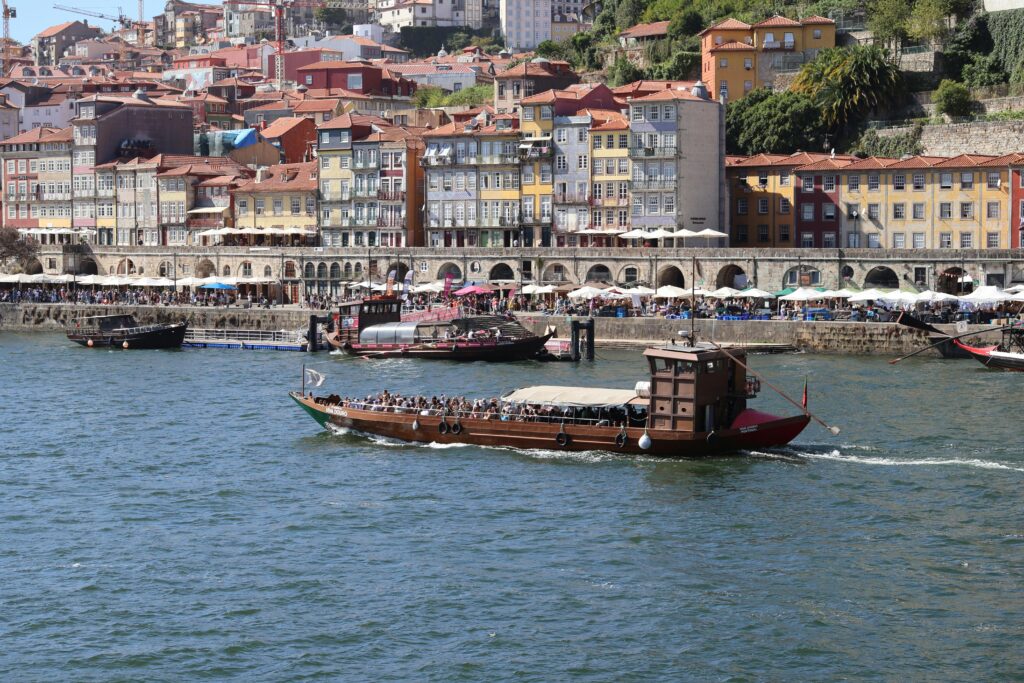
I’ve walked three Camino routes, and the Português is the one I keep coming back to. There’s something about starting in Porto – that extraordinary city of azulejos and port wine and the Douro cutting through it all – and walking north through lush Minho countryside, past Roman bridges and fishing villages, across an international border on foot, and into Galicia as the landscape slowly shifts into something wilder and greener. It gets under your skin in a way that’s hard to explain until you’ve done it.
This Camino Português guide is built on that firsthand experience – including walking it most recently in March 2026, which gave me a perspective on the off-peak route that most guides don’t cover. Whether you’re planning a 10-day sprint from Porto or the full journey from Lisbon, here’s everything you need to know.
Camino Português: Quick Facts at a Glance
| Starting Points | Lisbon (620km) or Porto (270km) |
| End Point | Santiago de Compostela, Spain |
| Distance (from Porto) | Approx. 240–270km depending on route variant |
| Duration (from Porto) | 10–14 days |
| Duration (from Lisbon) | 24–28 days |
| Difficulty | Moderate. Less hilly than the Francés; some coastal stages have sandy paths. |
| Best Time to Walk | April–June, September–October. March is beautiful but wet. Avoid August if possible due to heat and crowds. |
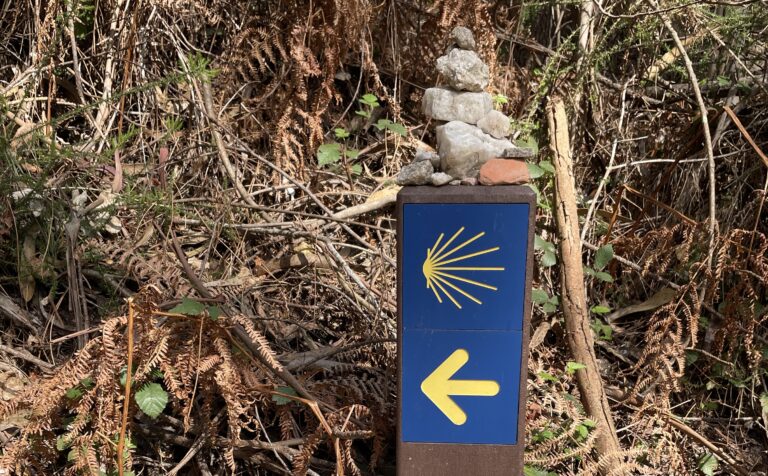
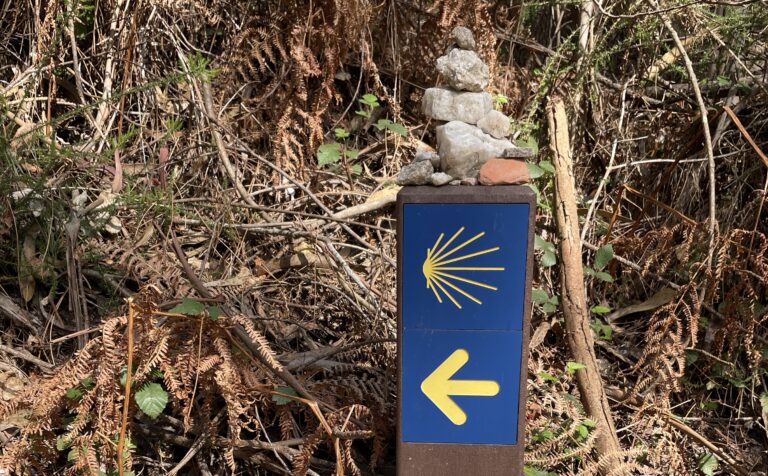
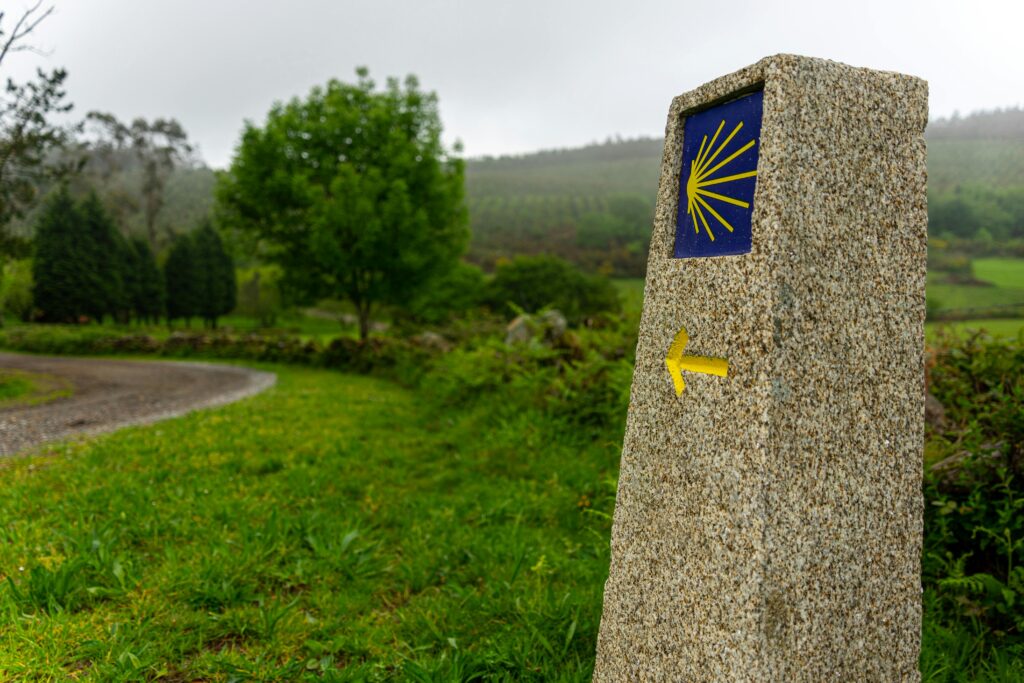
| Waymarking | Good throughout – yellow arrows and scallop shell markers. |
| Route Variants | Central Route (inland) and Coastal Route (Via Litoral). Spiritual Variant available in the final stages. |
| Popularity | 2nd most walked Camino globally. Significantly less crowded than the Francés. |
Why Choose the Camino Português?
With so many routes to choose from, what makes the Português stand out? Here’s my honest case for it:
- It’s the perfect length from Porto to Santiago de Compostela. At 240–270km, it’s completely walkable in 10–12 days – ideal if you have two weeks rather than five. You still walk through stunning countryside, cross an international border on foot, and earn your Compostela.
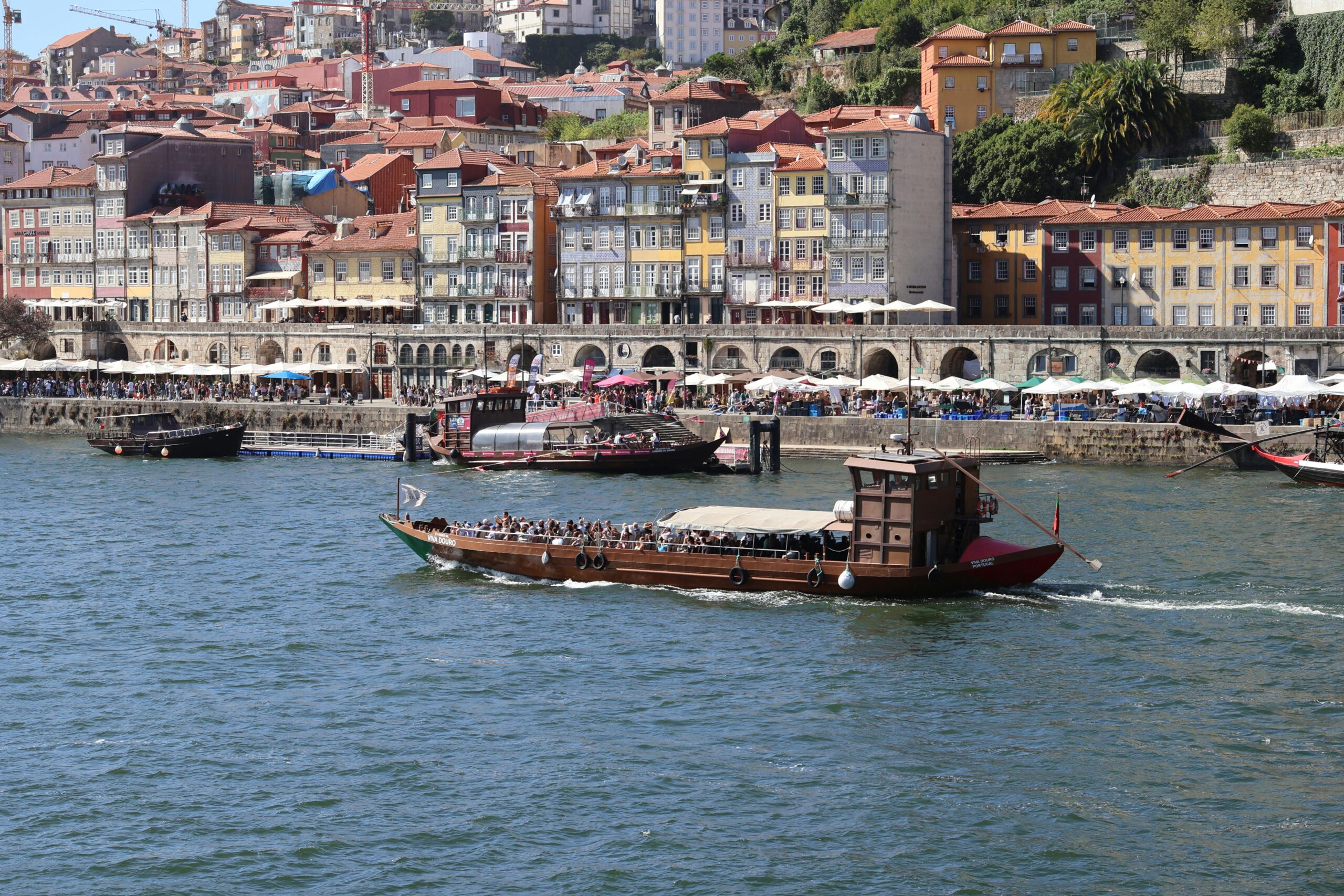
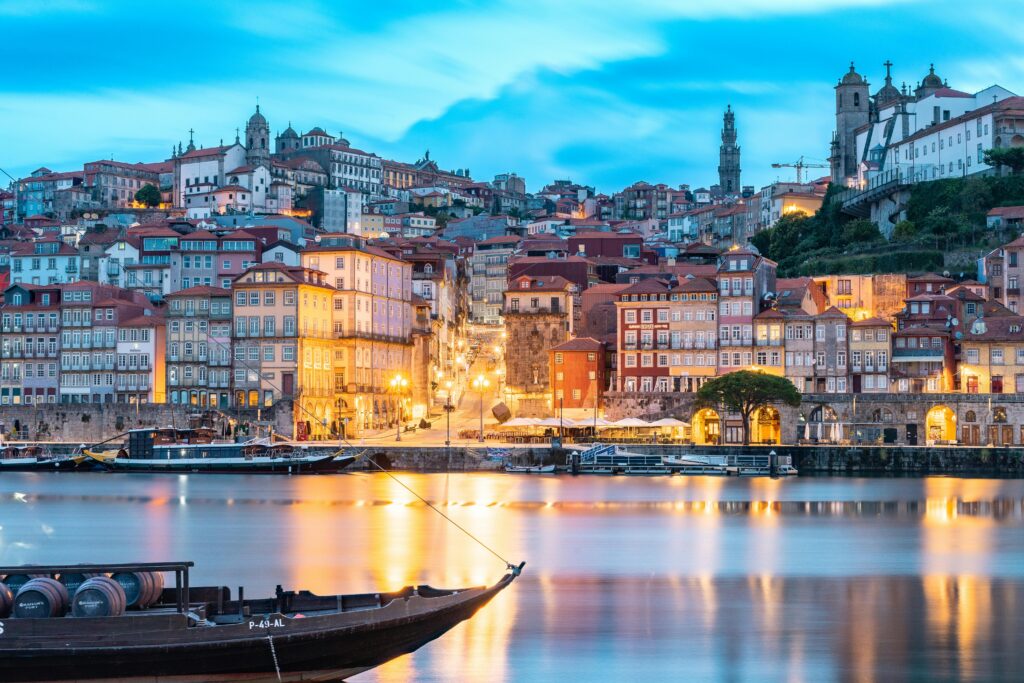
- The starting cities are extraordinary. Porto is one of Europe’s great cities – arrive a day or two early and give yourself time to wander. The Ribeira, the port wine caves of Vila Nova de Gaia, the azulejo-tiled façades. It’s a genuinely wonderful place to begin a journey.
- It’s significantly quieter than the Francés. Especially in Portugal. More chance to walk in peaceful solitude, better albergue availability, and a more intimate atmosphere. Walking in March, in some stages I went hours without encountering another pilgrim.
- The coastal variant is exceptional. The Via Litoral hugs the Atlantic for much of the Portuguese section – dramatic cliffs, fishing villages, sweeping ocean views. One of the most beautiful walking routes in Europe.
- Crossing a border on foot is kind of surreal. Walking across the old iron bridge from Valença into Tui, you leave Portugal and enter into Spain with a single step – that’s cool.
- The amazing food and wine. Portugal’s Minho region is known for its vinho verde, fresh seafood, and grilled meat. Some of the best pilgrim eating on any Camino route – and a pastel de nata in Porto before you start is non-negotiable.
Central Route vs Coastal Route: Which Should You Walk?
The Camino Português splits into two main variants through Portugal: the Central Route (the traditional inland path) and the Coastal Route (Via Litoral) along the Atlantic coast. Both routes rejoin in Redondela, Spain, before continuing together to Santiago.
The Central Route
This is the original, traditional Camino Português – more historically significant and with better pilgrim infrastructure. It follows an ancient pilgrim road north from Porto through Barcelos, Ponte de Lima, and Ponte de Barca. Some sections pass through industrial or suburban areas between towns – so it’s not always scenic, but you’ll get more than enough time trekking in lush forests to make up for it.
The Coastal Route (Via Litoral)
Starting from Porto’s coastal suburb of Matosinhos, the Via Litoral follows the Atlantic north through Póvoa de Varzim, Esposende, and Viana do Castelo before rejoining the central route. You can expect dramatic ocean views, small fishing village charm, and some of the most photographed scenery on any Camino route. This route has slightly fewer albergues than the central route, so definitely plan accommodation a stage ahead in peak season.
Worth Knowing About: The Spiritual Variant
The Spiritual Variant is a beautiful detour available in the later stages of both the Central and Coastal routes. It diverges from the main path about 3km north of Pontevedra, and rejoins it just outside Padrón where you will continue to Santiago as normal. Taking this variant adds roughly an extra day to your journey.
The Spiritual Variant follows a route of profound historical significance – the Traslatio – which traces the legendary journey of the apostle Saint James’s remains, brought by boat from Jerusalem to Galicia by his disciples after his beheading in 44 AD. It passes through quiet Galician forests and hilltop villages before culminating in a boat crossing along the Río Ulla — the only maritime Way of the Cross in the world, lined with seventeen ancient stone crosses along the riverbank.
The boat itself takes about 90 minutes; tickets cost around €30 and are limited – I’d strongly recommend booking in advance (La Barca del Peregrino is the main operator). I must say that for me, the boat crossing was miserable in the cold and wind in late March – definitely not the romantic experience the guidebooks suggest – but you’d have a better ride in summer with warmer temperatures. However, visiting the Mosteiro de Armenteira alone is worth taking the variant (more on this below).
The Verdict
If you’re a first-timer with 10–12 days and want maximum scenery, lean coastal. If you want the more historically rich, traditionally pilgrim experience with better infrastructure, go central. Some pilgrims combine both – walking the coastal section through Portugal before joining the central route in Spain. And if you have the time and inclination, I’d definitely recommend the Spiritual Variant.
Camino Português Stages from Porto (Central Route)
Below is the standard stage breakdown from Porto on the Central Route. Distances and stage divisions vary by guidebook – these reflect the most commonly walked itinerary.
| Stage | From | To | Distance | Notes |
| 1 | Porto (Sé Cathedral) | Vila do Conde | 27km | A long first stage – consider splitting at Rates (21km) if your feet aren’t ready. |
| 2 | Vila do Conde | Barcelos | 22km | Charming market town. Home of the famous Barcelos cockerel legend. |
| 3 | Barcelos | Ponte de Lima | 34km | Long stage – many pilgrims split at Abade de Neiva (18km). Worth it for Ponte de Lima. |
| 4 | Ponte de Lima | Rubiaës | 22km | Beautiful walking. Rubiaës is a lovely, quiet village to end a stage. |
| 5 | Rubiaës | Valença | 17km | Short and lovely. Valença’s fortified old town is one of Portugal’s finest. |
| 6 | Valença | Redondela | 32km | Cross into Spain! The iron bridge into Tui is a genuinely moving moment. |
| 7 | Redondela | Pontevedra | 19km | Galician countryside. Pontevedra’s car-free old town is worth a slow evening. |
| 8 | Pontevedra | Caldas de Reis | 21km | Gentle walking through eucalyptus forests and small Galician villages. |
| 9 | Caldas de Reis | Padrón | 18km | Padrón is where St. James’s body allegedly arrived by boat – deeply historic. |
| 10 | Padrón | Santiago de Compostela | 25km | The final stage. Take your time with it. |
Total distance: approximately 237km over 10 stages. With the splits most pilgrims make on the longer days, this typically takes 12–14 days.
Coastal Route (Via Litoral): Key Stages
The coastal route diverges from Porto’s coastal suburb of Matosinhos and rejoins the central route in Redondela, Spain.
| Stage | From | To | Distance | Highlights |
| 1 | Porto / Matosinhos | Póvoa de Varzim | 32km | You start at the sea. Atlantic views from the first steps. |
| 2 | Póvoa de Varzim | Esposende | 25km | Dramatic coastal cliffs, working fishing villages. |
| 3 | Esposende | Viana do Castelo | 27km | The most scenic stage. River Lima estuary views are extraordinary. |
| 4 | Viana do Castelo | Caminha | 24km | Beautiful riverside walking to the border town of Caminha. |
| 5 | Caminha | Redondela | varies | Cross into Spain. Route rejoins the central at Redondela. |
From Redondela onward, the Coastal and Central routes merge into one. Refer to the Central Route stage breakdown above for stages 7–10 to Santiago.
Starting from Lisbon: Is It Worth It?
Walking the full Camino Português from Lisbon adds approximately 380km and 15–17 days to your journey. It’s a significant undertaking, and I want to give you a fair picture of it so you can make your own decision on where to start.
The Lisbon–Porto section passes through two of Portugal’s most historically significant regions — the coastal province of Estremadura, with its fishing villages, pine forests and Atlantic light, and the broader, more pastoral Ribatejo, a land of wide river plains, vineyards and grazing horses along the Tagus. Both are genuinely interesting parts of Portugal to travel through.
The trouble is that walking through them on the Camino route is a different experience to, say, road-tripping them — this section has notably more road walking and thinner pilgrim infrastructure than the Porto–Santiago stretch, and the stage towns are less geared toward peregrinos.
My honest opinion: most first-timers are better served starting from Porto, where the route is more beautiful, better marked, and more immediately rewarding. That said, if you have four weeks, a high tolerance for long days, and the appeal of walking from one magnificent city to another — Lisbon all the way to Santiago — it is a journey with its own quiet satisfaction.
Practical Information
Getting to Porto
Porto Francisco Sá Carneiro Airport is well-connected from across Europe. The metro runs directly from the airport to the city centre (Line E, Violet) in about 35 minutes for €2.60. The traditional starting point is the Sé Cathedral in Porto’s old town – pick up your Credencial here, get your first stamp, and begin.
Getting Home from Santiago
Santiago de Compostela Airport connects to Madrid, Barcelona, London, and other European cities. Buses and trains also run to Porto (4–5 hours), Vigo (1 hour), and Madrid (7 hours) for onward connections. Book return transport before you leave – flights from Santiago can be limited, especially in peak season.
Navigation
The Camino Português is well-marked with yellow arrows and blue-and-yellow scallop shell markers. Navigation is generally straightforward, though some sections through Portuguese towns and suburban areas can be briefly confusing. The Buen Camino app is excellent to supplement – it’s free and works offline – I used it daily.
Language
You’ll walk through two countries with two languages. Basic Portuguese phrases are appreciated in Portugal – locals are warm but English is less universal than in Spain. A few words go a long way.
- Bom Caminho (Portuguese) / Buen Camino (Spanish) – Good Way
- Obrigado/a (Portuguese) / Gracias (Spanish) – Thank you
- Um café, por favor (Portuguese) – A coffee, please
Weather
The Camino Português passes through one of the wettest regions of the Iberian Peninsula – the Minho and Galicia are green precisely because it rains. A good waterproof jacket is non-negotiable. I walked in March and it was frequently wet – but also profoundly beautiful, with mist on the hills and the rivers running full.
- Spring (April–June): The sweet spot. Green landscapes, mild temperatures (15–22°C), occasional rain.
- Summer (July–August): Hot (25–35°C in Portugal), drier, busier. Start early to walk in cooler morning temperatures.
- Autumn (September–October): Excellent. Harvest season, beautiful light, manageable temperatures.
- Winter (November–March): Wet and quiet. Some albergues close. I would not recommend it for first-timers, but if you’re drawn to solitude and don’t mind the rain – it has its own profound quality.
Accommodation
Being the second most popular Camino route, the Camino Português features good albergue infrastructure throughout. Municipal albergues exist in larger towns at €5–10/night and are first-come-first-served without reservations only. Private albergues run €15–30/night and most are bookable in advance – which is advisable during peak season or on the coastal route, where options are more limited.
One thing I’d say from personal experience: the Camino rewards a degree of spontaneity. I walked in March without pre-booking most nights and found it entirely manageable – albergues were rarely full and I had the freedom to stop where I wanted. In peak season, booking a night or two ahead may be wise, or just be sure to start walking early so you get to the municipal albergues before they’re full.
What to Pack for the Camino Português
The golden rule: your pack should weigh no more than 10% of your body weight. On the Português, this matters as much as on any other route – the cumulative weight over 10–14 days is significant, and you’ll shed anything unnecessary within the first two days anyway.
A hot take I’d like to share: in my opinion (and corroborated by many experienced pilgrims I met along the way) waterproof hiking boots, while often recommended, are usually the wrong choice for the Camino. I started my first Camino Português in Timberland waterproof boots and switched to Asics trail runners partway through – the difference was immediate and dramatic. Light trail runners dry faster, breathe better, and cause significantly fewer blisters on long daily walks.
If you’d like more insider tips alongside a full breakdown of everything you need to pack, check out our Camino de Santiago Packing List: The Definitive Guide. It covers everything from footwear and clothing to sleep system, with gear recommendations for different budgets.
How Much Does the Camino Português Cost?
The Português from Porto is one of the most cost-efficient Camino routes given its length. Here’s a realistic daily breakdown:
- Budget pilgrim: €30–40/day (municipal and private albergues, eating simply)
- Mid-range: €50–70/day (mix of albergues and private rooms, dining out)
- Comfortable: €80–120/day (private rooms, restaurants)
A realistic budget-focused cost estimate for the Camino Português from Porto – including gear and 10–12 days on the trail, excluding flights – is €700–1,100.
For a full cost breakdown by category, check out How Much Does the Camino de Santiago Cost?
Food and Drink: Eating Your Way to Santiago
This is definitely not a route that asks you to suffer through bad food. The Camino Português passes through some of the best eating territory in the Iberian Peninsula, and I’ve got to be honest – some of my most memorable Camino moments happened at a table rather than on a path.
In Portugal
- Pastel de nata: The iconic Portuguese custard tart. Have one (or three) in Porto before you start. Non-negotiable.
- Francesinha: Porto’s famous beer-soaked meat sandwich with a spicy sauce and a bajillion calories. A genuine Porto institution.
- Bacalhau (salt cod): Portugal’s national obsession. Allegedly there are 365 different recipes for it – one for each day of the year. I’d recommend trying it simply grilled with olive oil and potatoes.
- Vinho verde: The young, slightly effervescent white wine of the Minho region. Light, refreshing, and dangerously drinkable at €2–3 a glass. The perfect end to a long stage.
In Galicia (Spain)
- Pulpo a la gallega/ á feira: Traditional Galician-style octopus with olive oil, paprika and sea salt. This is worth planning a meal around – stop by a restaurant specialising in it (also known as pulperías) and watch them cook the entire octopus in a large vat.
- Caldo gallego: Galician white bean and greens soup. Perfect pilgrim fuel after a long day.
- Tarta de Santiago: Almond cake marked with the Cross of Saint James – I like having a slice in Santiago to celebrate the end of my journey.
- Albaríño wine: Galicia’s signature white wine – crisp, mineral, and perfect with seafood.
Unmissable Highlights of the Camino Português
Porto – The Starting City
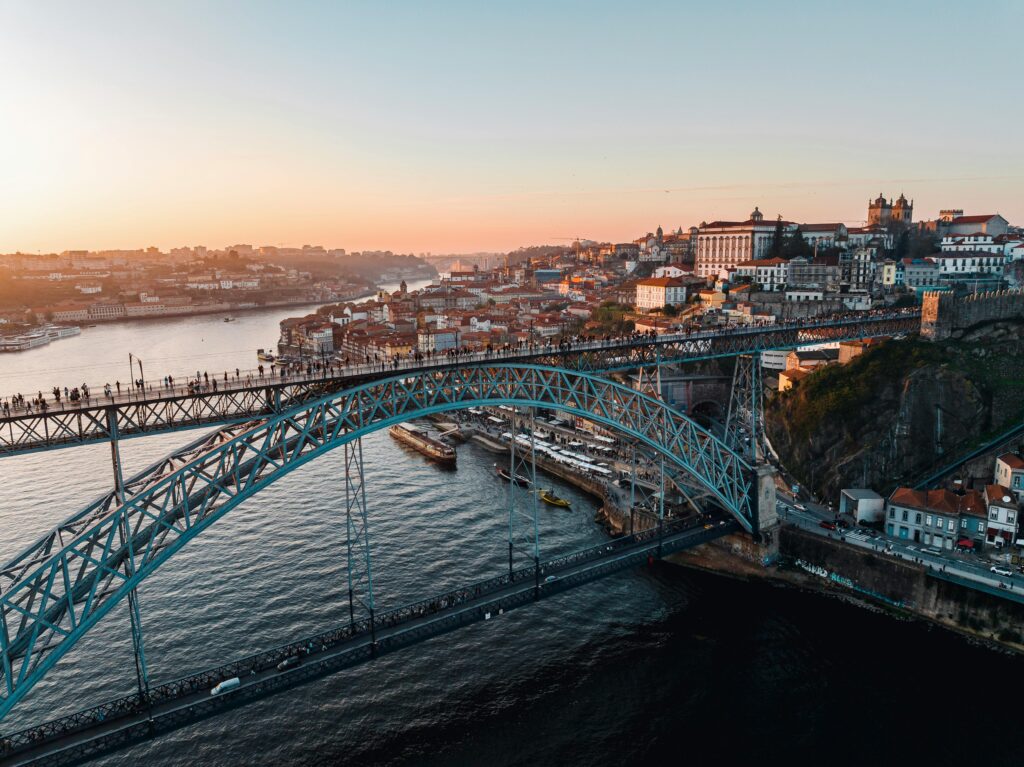
Porto deserves at least a full day before you start walking. The Ribeira riverfront, the Dom Luís I bridge views, the Livraria Lello bookshop, the tile-covered São Bento train station are all within walking distance of the Sé Cathedral starting point. I recommend arriving a day or two early and giving yourself time to explore this vibrant city properly.
Barcelos – The Cockerel Town
The charming market town of Barcelos is worth lingering in for a bit. The medieval bridge and Igreja do Senhor da Cruz are worth the walk, and the Thursday market is one of the largest in the country. The town is also home to one of Portugal’s most beloved legends – the Barcelos Cockerel.
The story goes like this: in medieval Barcelos, a crime had been committed and the townspeople were looking for someone to blame. A Galician pilgrim passing through on his way to Santiago de Compostela was arrested as a suspect — wrongly, he insisted — but nobody believed him and he was condemned to hang. As a final act of desperation, he asked to be taken to the judge, who was in the middle of a banquet with friends. The pilgrim pointed to a roasted cockerel on the table and declared: “As surely as I am innocent will that cockerel crow if I am hanged.” And against all reason, it did. The judge ran to the gallows to find that the man had been saved from death by a poorly tied knot. He was immediately freed.
Years later, the pilgrim returned to Barcelos and built a monument to Saint James and the Virgin in gratitude — the crucifix can still be found today at the town’s Archaeological Museum. The colourful ceramic cockerel born from this legend has since become one of Portugal’s most recognisable national symbols, standing for faith, justice, and the miraculous possibilities of the road.
Ponte de Lima – Portugal’s Oldest Town
Often called Portugal’s most beautiful village, Ponte de Lima sits on the banks of the River Lima with a stunning medieval bridge that pilgrims have crossed for centuries. Linger here if you can – a slow afternoon in Ponte de Lima with a café by the river is simply sublime.
Valença / Tui – The Border Crossing
The crossing from Portugal into Spain at Valença is one of the Camino’s genuinely significant moments. The fortified old town sits high above the Miño river, connected to the Spanish town of Tui by a magnificent 19th-century iron bridge. Walking across it – leaving one country and entering into another with a single step – is surreal. There’s a marker in the middle of the bridge that you can stand across, with one foot in Portugal and one foot in Spain. Hah! Worth the tickle.
Mosteiro de Armenteira – A Hidden Gem
If you walk the Spiritual Variant, do not skip the Mosteiro de Armenteira. Not many guidebooks give it the attention it deserves. I spent two nights here in March and it was one of the most unexpectedly powerful experiences of the walk. The monastery is active, the peace and silence are absolute, and there’s a statue of Mary in the church that stopped me in a way I’m still thinking about.
Pontevedra – A City Worth Savouring
Pontevedra’s car-free old town is one of Galicia’s great pleasures – a labyrinth of granite streets, tapas bars, and pilgrim camaraderie. Large enough to have excellent restaurants, small enough to feel intimate. Take a rest day here if you can, to explore its winding alleyways and indulge in some tapas.
Padrón – Where the Journey Began
According to tradition, the boat carrying the body of Saint James came ashore at Padrón. The church of Santiago contains the stone mooring post the boat was tied to – a quietly moving stop for pilgrims of all faiths and none. The final 25km stage from Padrón to Santiago carries a particular kind of weight that you’ll definitely feel.
Santiago de Compostela – The Arrival
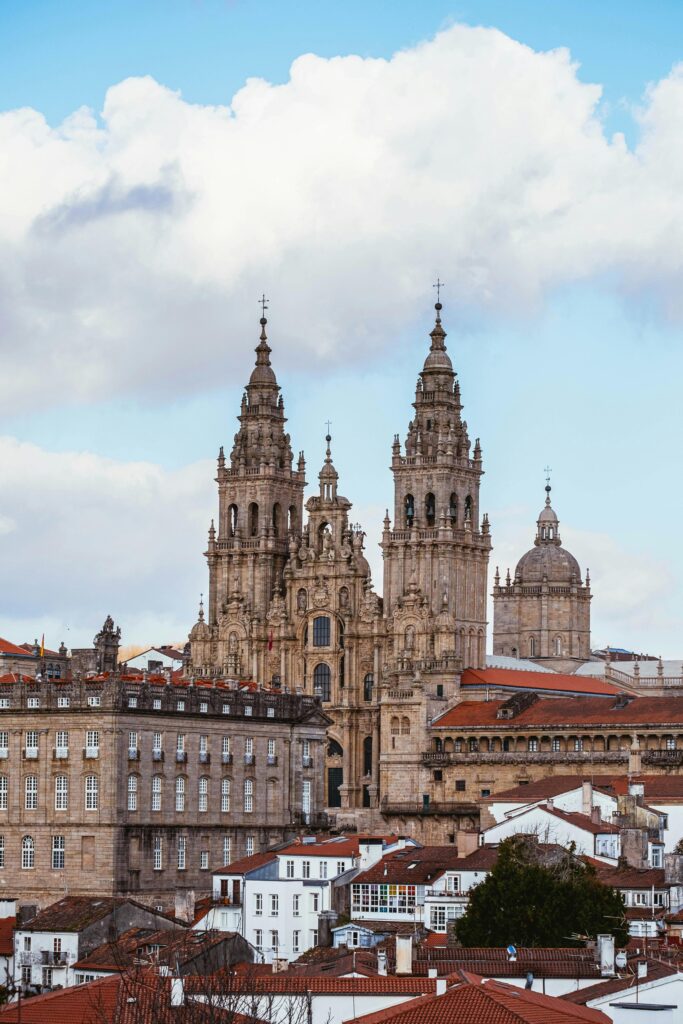
I’ll be honest – arriving in Santiago was quieter than I’d expected. The cathedral was there, the square was beautiful, and I felt something – but it wasn’t the wave of emotion I’d anticipated. What I remember most from the walk isn’t the arrival at all, but everything before it: the moss on the stone walls, the sound of rivers running alongside the path in the early morning, the small towns that appeared at exactly the right moment, the unhurried coffee before a long stage. The Camino gives you back the ability to find joy in small things. That, more than any arrival, is the gift.
Frequently Asked Questions
Is the Camino Português good for beginners?
Yes – it’s one of the best routes for first-timers. The shorter distance from Porto, good infrastructure, and moderate terrain make it very accessible. It’s the route I’d recommend most readily to someone walking their first Camino.
Do I need to book accommodation in advance?
On the central route in shoulder season, you can largely walk-in. On the coastal route and in peak summer, booking 1–2 stages ahead is wise. The last 100km into Santiago gets busy year-round and advance booking is recommended. If you’d like to take a chance on getting a bed at a municipal albergue, be sure to start walking early.
Can I walk the Camino Português solo?
Absolutely – most pilgrims start solo. Having the opportunity for quiet, solo introspection is one of the best gifts of the Camino. Also, the Camino community forms naturally on the trail; you’ll meet fellow pilgrims within the first day and see familiar faces all the way to Santiago. So, you’ll likely have the opportunity for some company, if that’s what you desire.
How physically demanding is the Camino Português?
Moderate. Less mountainous than the Francés or Primitivo, though the coastal route has some sandy beach sections that are surprisingly tiring on the legs. The main challenge, as on any Camino, is cumulative – it’s not the distance in a single day but the daily repetition over two weeks. A basic 6–8 week walking plan is recommended – see more in our Camino de Santiago Complete Beginner’s Guide.
What’s the difference between the Compostela and the Certificado de Distancia?
The Compostela is issued at the Pilgrim Office in Santiago to those who have walked for religious or spiritual reasons. The Certificado de Distancia (€3) records the exact distance walked and is available to all pilgrims regardless of motivation. You can request both.
How does the Camino Português compare to the Camino Francés?
They offer genuinely different experiences. The Francés has more pilgrims, more established infrastructure, and the iconic Meseta experience. The Português is quieter, more intimate, passes through Portugal as well as Spain, and – from Porto – takes a third of the time (10–12 days). For those with limited time, the Português from Porto is excellent value: a complete, deeply satisfying Camino that doesn’t require a month off work.
Ready to Walk the Camino Português?
Porto is waiting. So is the vinho verde, and the Atlantic coast, and Valença in the evening light, and the moss-covered stone walls of Galicia, and the quiet of a village albergue after a long day. The Camino Português is one of the great walks in Europe – and it’s more accessible than you might think.
To help you prepare for your trip, explore the rest of our planning guides:
- Camino de Santiago Complete Beginner’s Guide
- Camino de Santiago Packing List: The Definitive Guide
- How Much Does the Camino de Santiago Cost?
Bom Caminho. 🌟