Camino Português Coastal vs Central Route – Which Should You Walk?
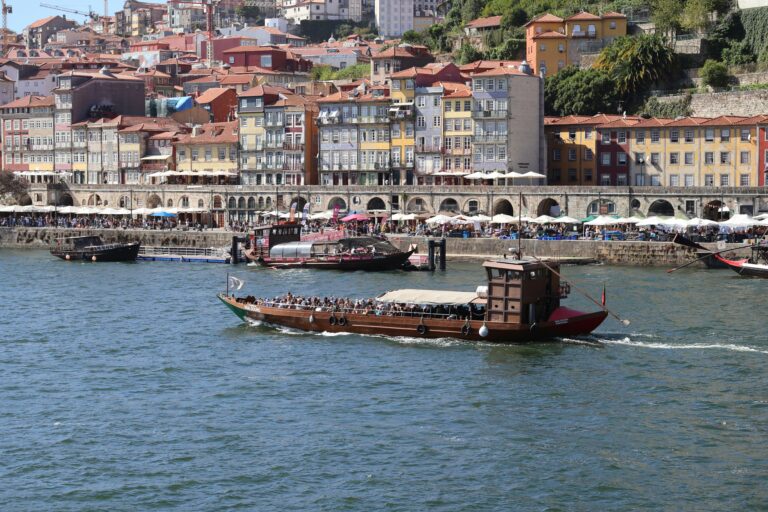
The Camino Português coastal vs central question is one of the first decisions you’ll face when planning your walk – and it’s a genuinely interesting one, because these two routes offer meaningfully different experiences rather than just different scenery. Both leave from Porto and rejoin at Redondela in Spain before continuing together to Santiago. What happens in between is where they diverge.
Quick Facts At a Glance
| Central Route | Coastal Route (Via Litoral) | |
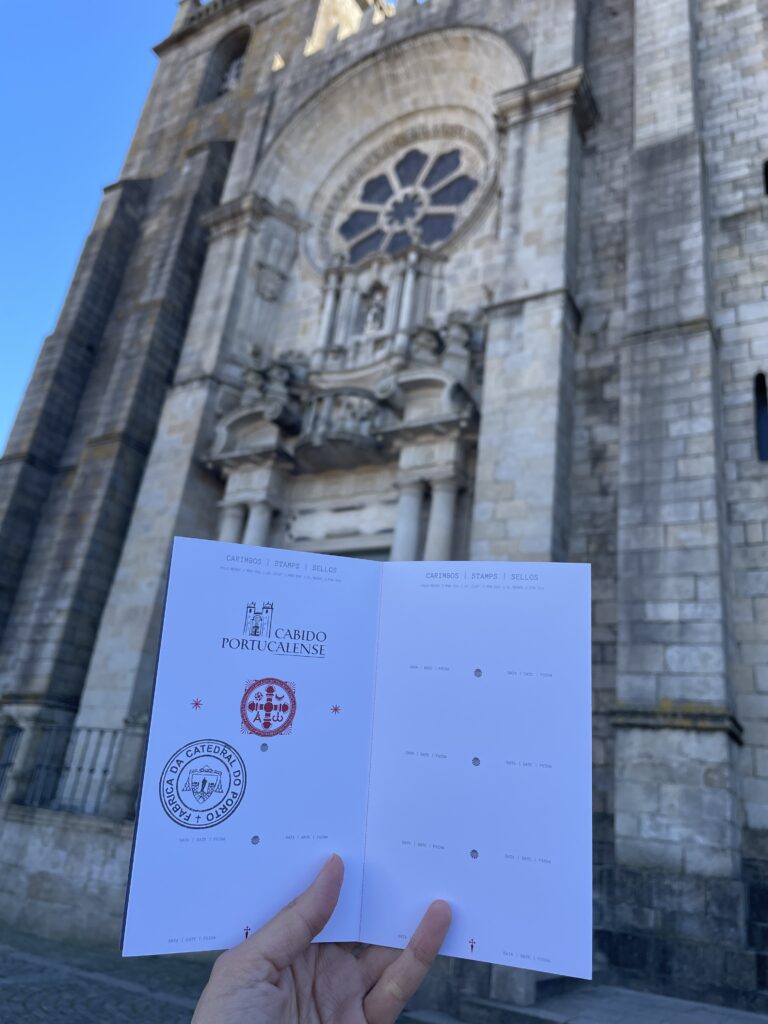
| Starting point | Porto Sé Cathedral | Matosinhos (Porto’s coastal suburb) |
| Distance to Santiago | Approx. 237km | Approx. 270km |
| Terrain | Inland – forests, villages, Roman roads | Atlantic coast – cliffs, beaches, fishing villages |
| Pilgrim infrastructure | Excellent – well-established albergues throughout | Good but thinner – plan ahead in peak season |
| Scenery | Beautiful – some suburban sections early on | Spectacular – best coastal walking in Europe |
| Historical significance | High – ancient pilgrim road with centuries of history | Lower – more recently established route |
| Best for | First-timers, off-peak walkers, history lovers | Scenery seekers, summer walkers, photographers |
The Central Route: The Original Pilgrim Road
The Central Route is the traditional Camino Português – the path that pilgrims have been walking for centuries, north from Porto through Barcelos, Ponte de Lima, and Rubiaës before crossing the border at Valença. It’s the route with deeper historical roots and better pilgrim infrastructure and albergue network.
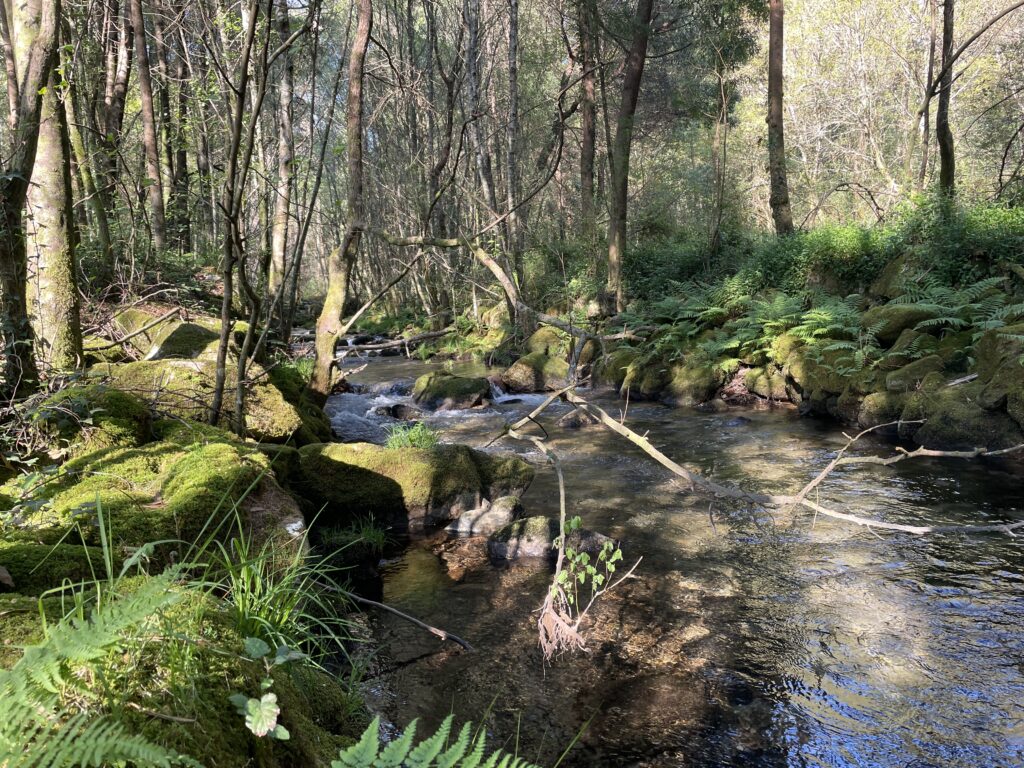
In terms of scenery, it’s genuinely beautiful for most of its length – lush Minho countryside, ancient Roman bridges, river valleys, dense forest. The early stages out of Porto pass through some suburban and industrial areas which aren’t the route’s finest moments, but these give way quickly to the green interior that defines the Minho region.
I’d say that the Central Route is the better choice if:
- This is your first Camino and you want reliable infrastructure
- You’re walking in off-peak months when coastal albergues may be closed
- You want to take the Spiritual Variant – it diverges from the Central Route at Pontevedra
- You’re drawn to the historical and cultural dimension of the pilgrimage over the scenic one
- You’re short on time, or would prefer the ease of a shorter route
The Coastal Route: The Atlantic Way
The Coastal Route – Via Litoral – starts from Matosinhos, Porto’s coastal suburb, and follows the Atlantic north through Póvoa de Varzim, Esposende, and Viana do Castelo before crossing into Spain and rejoining the Central Route at Redondela. For stretches of it, you’re walking directly alongside the ocean – dramatic cliffs, working fishing villages, sweeping Atlantic views. It is genuinely spectacular.
The trade-off is infrastructure. The Coastal Route has fewer albergues than the Central Route, particularly in the Portuguese section – in peak season this means booking a stage ahead is advisable, and in off-peak months some options close entirely. It’s also a slightly longer (40-odd kilometres extra) walk than the Central Route.
The Coastal Route is the better choice if:
- Scenery is your primary motivation – this is one of the most photogenic walking routes in Europe
- You’re walking in summer – the Atlantic breeze keeps temperatures more manageable than the inland route
- You’re an experienced pilgrim comfortable with planning accommodation more carefully (I recommend checking the Buen Camino App and booking with Hostelworld.com)
- You’re happy to start from Matosinhos rather than Porto’s historic centre – easily reached by metro
Can You Combine Both?
Yes – and this is actually a popular approach. Some pilgrims walk the Coastal Route through Portugal for the Atlantic scenery, then switch to the Central Route after crossing into Spain at Redondela. This gives you the best of both: the dramatic coastal walking in Portugal and the more established infrastructure and Spiritual Variant option in Galicia. It requires a little more planning at the transition point but is entirely straightforward in practice.
The Honest Verdict
If someone asked me which route to walk and I had to give a single answer, I’d say: Central Route for first-timers and off-peak walkers; Coastal Route for scenery-seekers and summer pilgrims. But the honest truth is that both are excellent, and the decision says more about what you’re after from the walk than about one route being objectively better than the other.
What I’d say with more conviction: whatever route you choose, walk the Spiritual Variant in Galicia if you have the time. It’s available from both, and simply unforgettable – read more about it in our complete guide to the Spiritual Variant.
Read Next
- Camino Português: The Complete Guide
- Camino Português from Porto – Is 10 Days Enough?
- Spiritual Variant Camino Português – Complete Guide
- Camino de Santiago Packing List: The Definitive Guide
Bom Caminho. 🌟