How to Train for the Camino de Santiago – A Realistic Guide (2026)
The most common training mistake people make before the Camino de Santiago is overcomplicating it. You don’t need a gym programme, a personal trainer, or a six-month plan. What you need is simple: to walk more, to do it in the shoes and pack you’ll be using on the trail, and to build up gradually over six to eight weeks before you leave.
Here’s how to train for the Camino de Santiago without making it harder than it needs to be.
How Much Training Do You Actually Need?
This really depends on your starting point – and you’ll have to be honest with yourself about this. If you already walk regularly, commute on foot, or have a physically active lifestyle, you need less preparation than someone who spends most of their day sitting at a desk. For the average person, a solid six to eight weeks should prepare you well – full training plan below – but I’ve also laid out alternatives for those short on time.
It’s worth pointing out that the Camino de Santiago is not technically difficult (it’s a long-distance walk, not a mountaineering expedition!) The challenge is more-so cumulative: walking 20–25km a day feels manageable on day one and considerably more demanding by day six. Training is about building the physical and mental endurance for that repetition, not the fitness for a sprint.
The Core Principle: Walk to Train for Walking
Now, don’t get me wrong – cycling, swimming, and gym work are great for building your fitness level. But none of them specifically prepare your feet, ankles, and legs for the stress of long-distance walking on varied surfaces. The only thing that truly trains you for the Camino is walking – ideally on terrain that includes pavement, gravel, and some incline, and ideally in the shoes and with the pack you plan to use on the Camino.
How to Train for the Camino de Santiago in 8 Weeks
The structure is simple: one long walk per week as the anchor, building gradually toward Camino distances, plus two or three shorter walks during the week to keep your legs moving and build base fitness. The long walk is the main event — this is where you build endurance. The shorter walks are maintenance, and they don’t need to be long or strenuous. A 5–8km walk on a weekday is enough. The final two weeks introduce back-to-back long days, which is the most important simulation you can do before leaving.
| Week | Weekly target | Focus |
| 1 – 2 | 3–4 walks, with at least one long walk (8–10km) | Get walking regularly. Any shoes are fine at this stage. |
| 3 – 4 | 3–4 walks, with at least one long walk (12–15km) | Introduce your Camino shoes and your loaded pack. |
| 5 – 6 | 3 walks including two consecutive long days (18–20km each) | Back-to-back simulation — this is the most important week. |
| 7 | 2–3 walks, with at least one long walk (22–25km) | Full Camino simulation: loaded pack, Camino shoes, varied terrain. |
| 8 | Easy walks only, up to 10km | Taper down. Let your body recover before you leave. |
What to Wear When Training
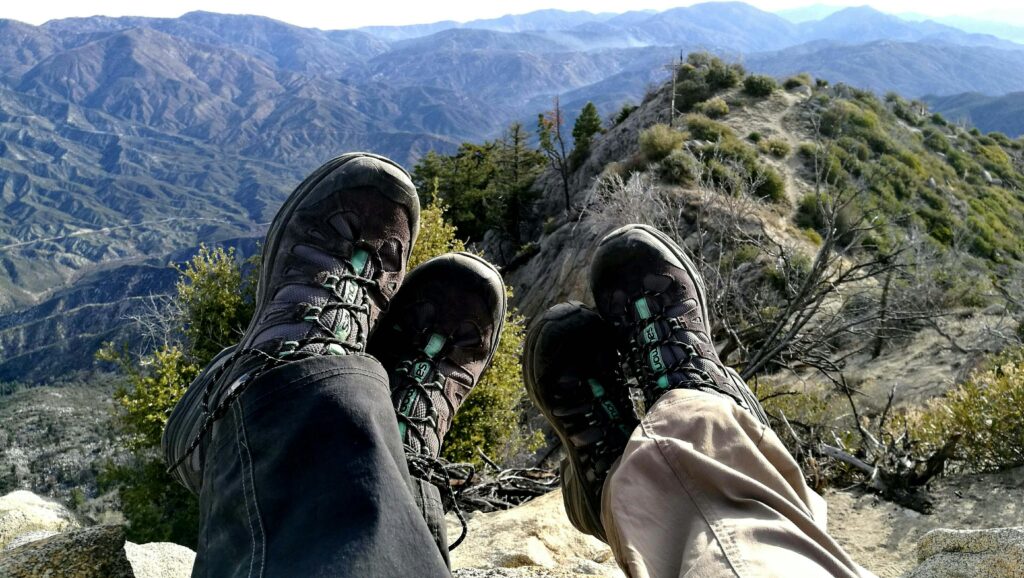
This is very important: you must train in the exact shoes and socks you plan to use on the Camino! No, not similar ones – the actual ones. Shoes need breaking in before you walk 20km a day in them, and socks matter more than most people think. Blisters and hotspots that appear on week two of your training walk are infinitely better than ones that appear on day two of the Camino – they toughen the skin on your feet, and reveal whether you’ll need a change in footwear.
Read also: Camino de Santiago Shoes – The Honest Footwear Guide
Training with Your Pack
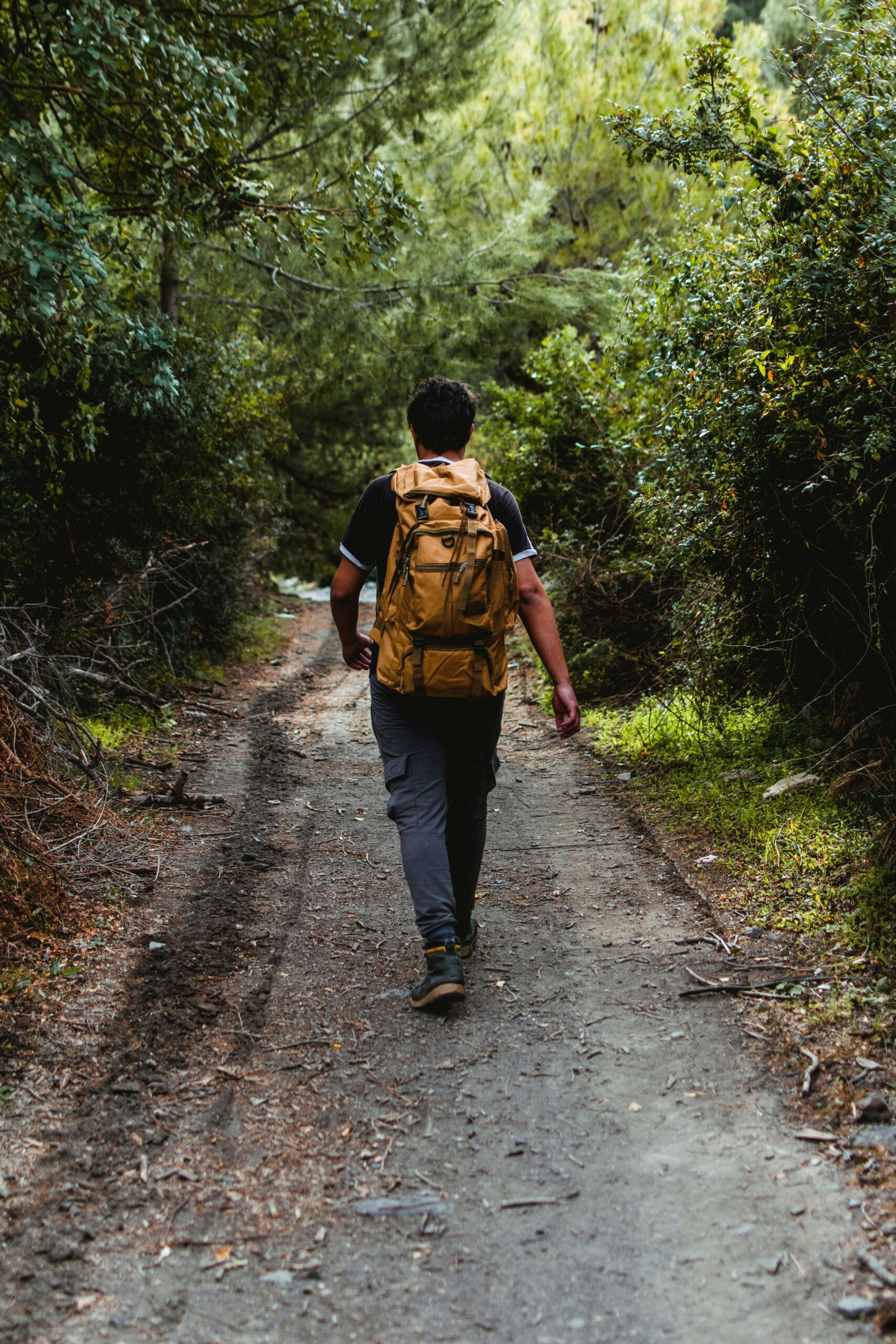
From week three onwards, do your longer walks with your loaded Camino pack on your back. Your pack should weigh no more than 10% of your body weight – if it’s heavier than that, reduce it before you train with it, not after. Walking 15km with a correctly weighted pack is very different to walking 15km unloaded, and the difference shows up quickly in your shoulders, hips, and lower back. This allows you to train your upper body as well, and discover if there are any fit issues with your backpack that require correcting before your trip.
What If I Only Have 4 Weeks?
Some training is better than no training! Compress the plan: jump straight to 12–15km long walks in week one, build to 20–22km by week three, and taper in week four. Focus your limited time on back-to-back walking days and doing everything in your Camino shoes and pack. Four weeks of consistent training will make a significant difference even if it’s not the full preparation you’d ideally have.
What If I Have No Time to Train?
Well! Life happens. Definitely walk anyway – but adjust your expectations and your first week’s stages. The Camino Português from Porto, for instance, opens with a 27km stage that is genuinely hard on untrained legs – if you haven’t trained, consider splitting that first stage at Rates (21km). In general, I’d recommend walking about 20km (no more than 25km) per day for your first week, to allow your body time to acclimatise. Most injuries come from pushing through early warning signs rather than from lack of fitness per se. The Camino is forgiving if you listen to it.
Whatever your fitness level going in, travel insurance is worth having – the Camino is low-risk but injuries happen. I’d recommend World Nomads; it covers walking and hiking activities and is popular with pilgrims.
Read Next
- Camino de Santiago Complete Beginner’s Guide
- Camino de Santiago Packing List: The Definitive Guide
- Camino Português Food Guide – What to Eat on the Trail
- Camino Português Coastal vs Central Route – Which Should You Walk?
Buen Camino. 🌟