Camino Português Food Guide – What to Eat on the Trail (2026)
So, everyone will tell you to eat a francesinha in Porto. And fine, it’s an experience – a beer-soaked meat sandwich under a blanket of molten cheese and spicy sauce, the kind of thing you eat once and think about for weeks.
But the francesinha is Porto’s party trick, the dish that gets all the attention. The Camino Português passes through some of the best eating territory in the Iberian Peninsula. The Camino Português food that actually made my heart sing and looped in my thoughts days later on the trail? Here’s my list.
In Porto: Before You Start Walking
Pastéis de Bacalhau – Salt Cod Croquettes
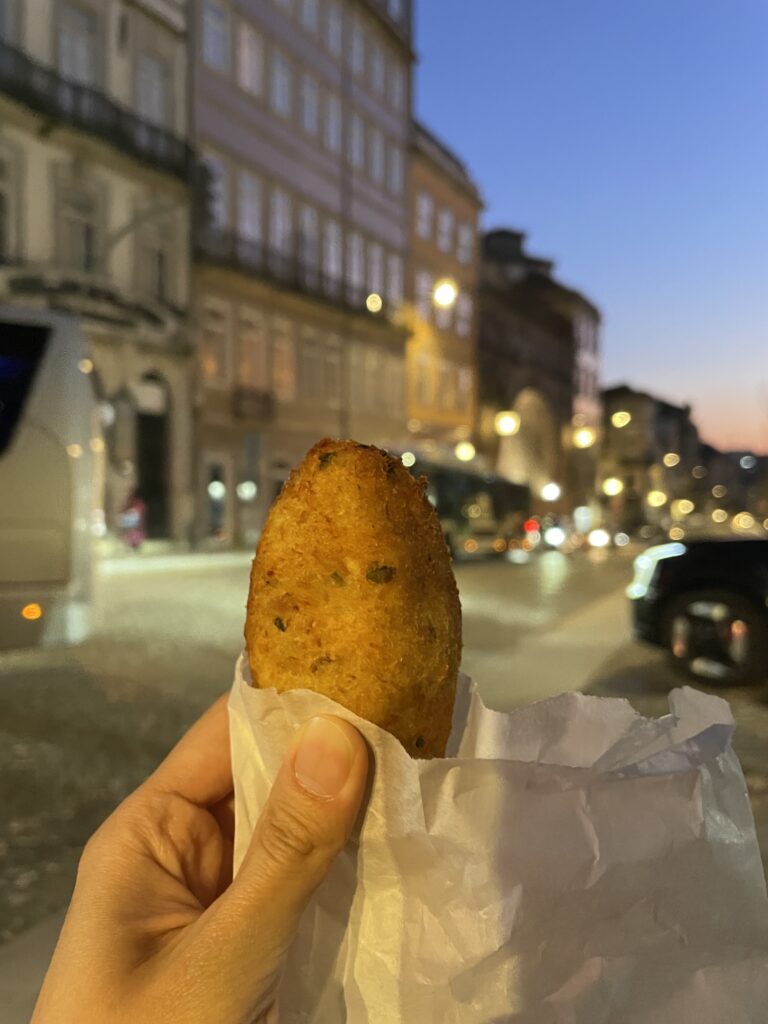
Porto at dusk, walking the old town before your first stage the next morning: this is when you find a street vendor and eat a pastel de bacalhau straight from the paper. Salt cod, potato, egg, and parsley, fried into a small torpedo shape – crisp on the outside, yielding and savoury within. It costs almost nothing and tastes like exactly where you are.
You’ll find bacalhau (Portuguese for dried salted cod) in every possible form throughout the Portuguese section of the Camino – grilled, baked, shredded into rice, folded into pastry. Portugal allegedly has 365 recipes for it, one for each day of the year. The croquette is the best, most accessible entry point in my opinion.
Pastel de Nata – The Morning Ritual
If you walk the Camino Português without eating a pastel de nata every morning in Portugal… Have you really walked the Camino Português?
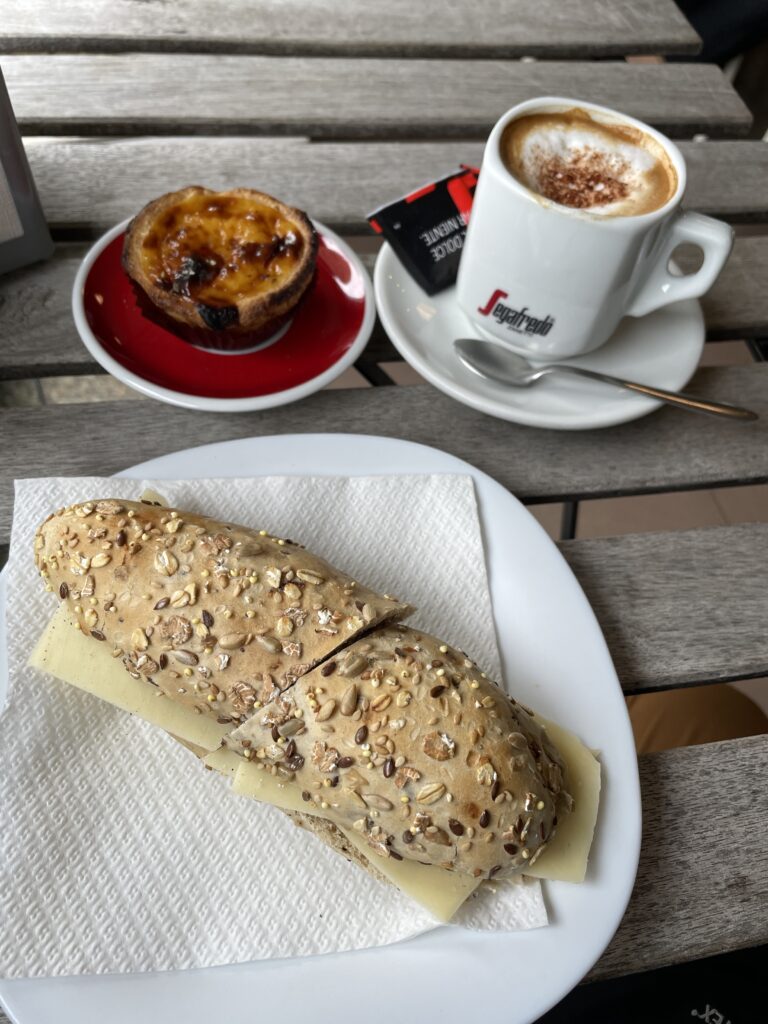
The custard tart – flaky pastry shell, silky burnt-top custard, ideally eaten warm with a galão or a flat white at a cafe stop before your pack goes back on – is the perfect pilgrim breakfast. It costs €1.20–1.50 almost everywhere. Absolutely non-negotiable.
On the Trail in Portugal: Pilgrim Staples
The Bocadillo – Your Daily Bread
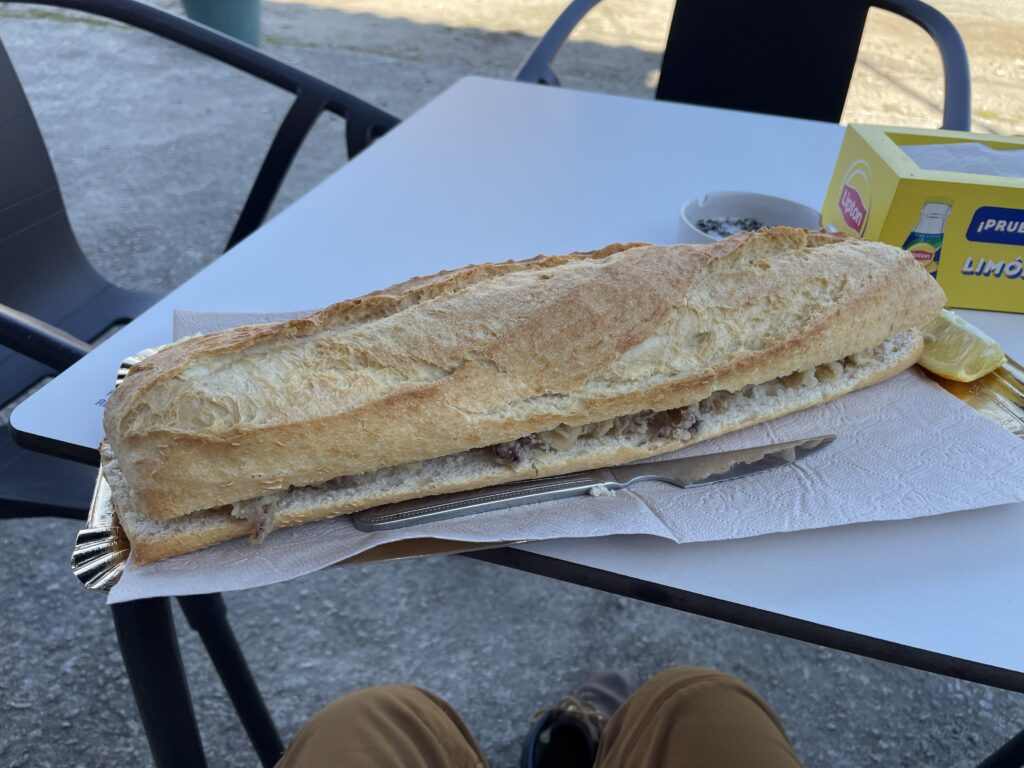
The bocadillo – a long crusty roll stuffed with whatever the bar has on offer – is the pilgrim lunch. No, it’s not glamorous and not Instagram-worthy. But when you’ve been walking since 7am and you sit down at a plastic table in a village square with a bocadillo the size of your forearm? It is one of the most satisfying things you’ll put in your mouth.
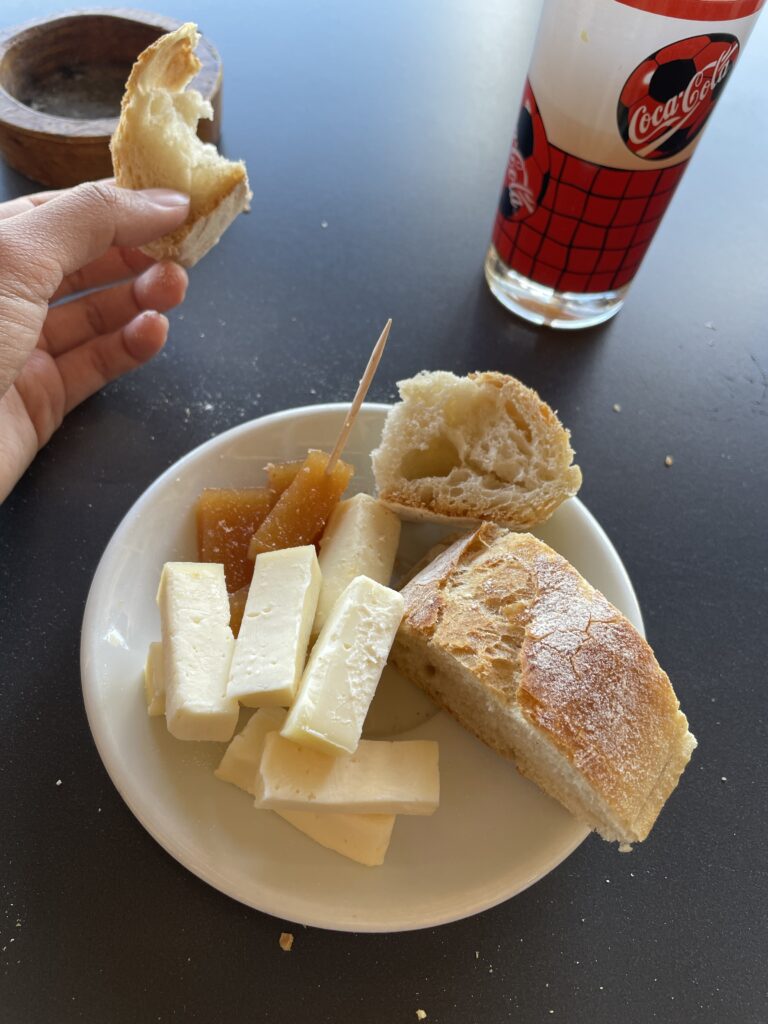
Queijo Tetilla and Membrillo – The Unexpected Bar Snack
Tetilla is a Galician cow’s milk cheese – mild, creamy, slightly tangy, named for its distinctive rounded shape. You’ll start finding it as you approach the Spanish border and it becomes a staple across Galicia. The classic pairing is membrillo – quince paste, sweet and dense – served alongside good crusty bread. I ordered it as a bar snack on a rest afternoon in a small village and fell in love. Simple, cheap, and genuinely delicious.
In Galicia: The Rewards
Crossing into Spain at Valença is one of the great moments of the Camino Português – and the food shifts noticeably as soon as you’re over the bridge. Galician cuisine is defined by the Atlantic: exceptional seafood, earthy broths, robust wine. After days of Portuguese cooking, it feels like a different culinary world, which it essentially is.
Zamburiñas – Grilled Galician Scallops
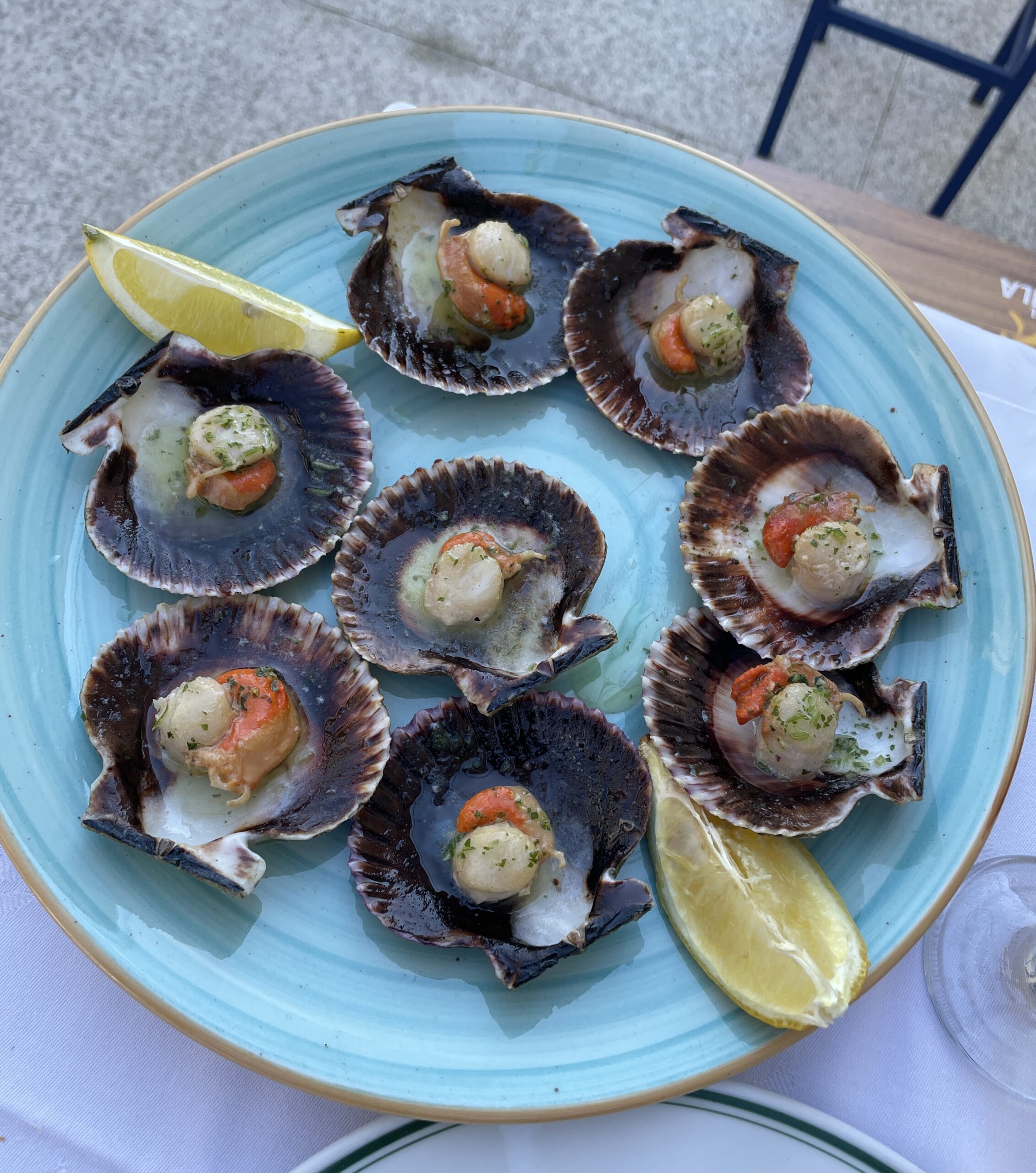
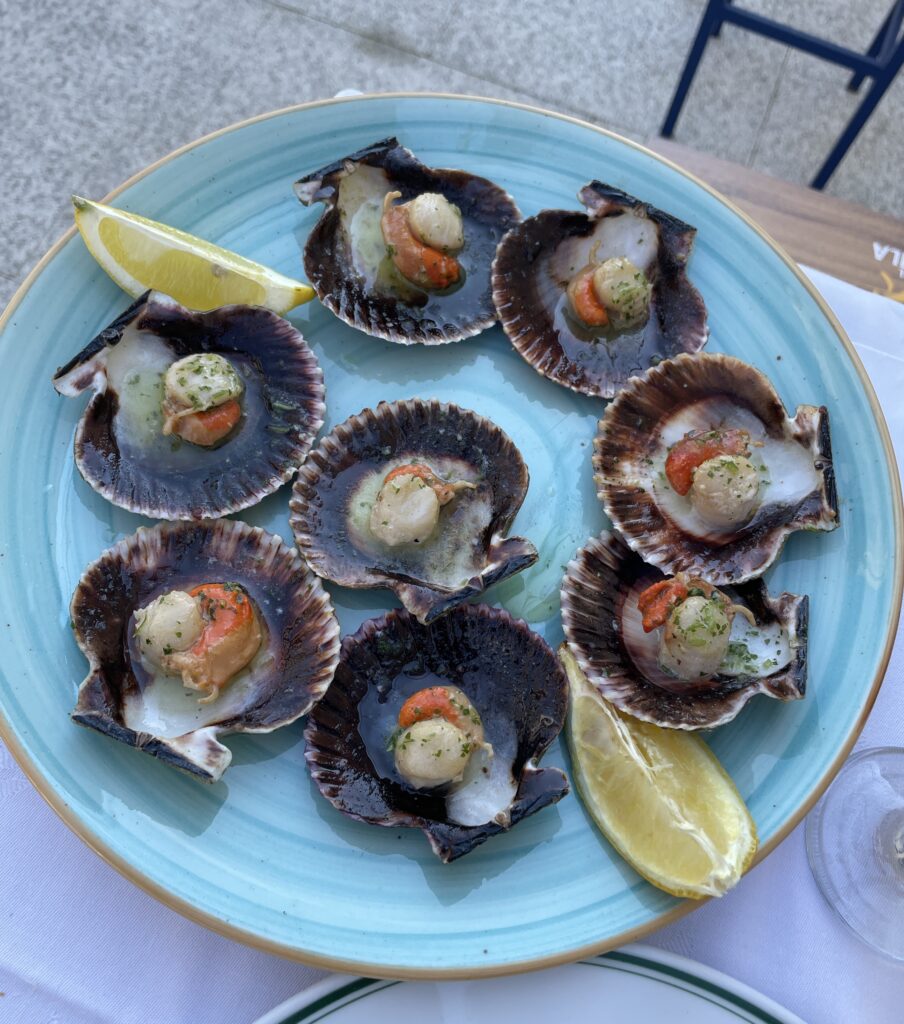
Zamburiñas are small Galician scallops, and they are extraordinary. Grilled simply in their own shells with a little olive oil, sea salt, and a scattering of fresh parsley – nothing more, nothing else. The first plate I ordered arrived looking almost too beautiful to eat: eight shells arranged in a circle, each one glistening, a wedge of lemon on the side. They tasted like the sea, sweet and briny and clean, and I ate them very slowly.
Pulpo á Feira – Galician Octopus
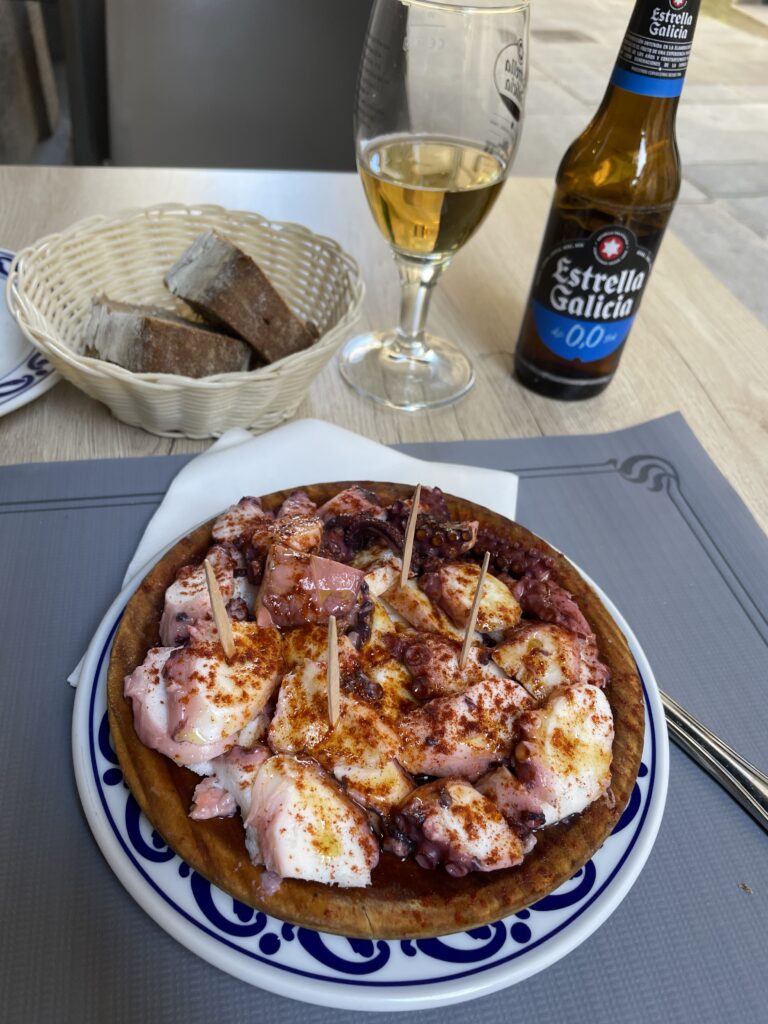
If you eat one thing in Galicia, make it Pulpo á Feira. Whole octopus is cooked in a large metal vat of boiling water until perfectly tender, then sliced onto a wooden plate, dressed with olive oil, coarse sea salt and sweet smoked paprika, and eaten with toothpicks alongside thick slices of dark bread. The cooking process is an event in itself in the Pulperías – restaurants that specialise in this dish – where you can watch the whole octopus go in and come out.
After a long walking day, sitting down to a plate of pulpo with a cool glass of albariño wine – or if you’re going non-alcoholic, an ice-cold Estrella Galicia 0.0 – is one of those Camino moments that makes the long hours of walking that came before it feel worth it. Be sure to soak up the paprika-laced olive oil with the dark bread. It is extremely good.
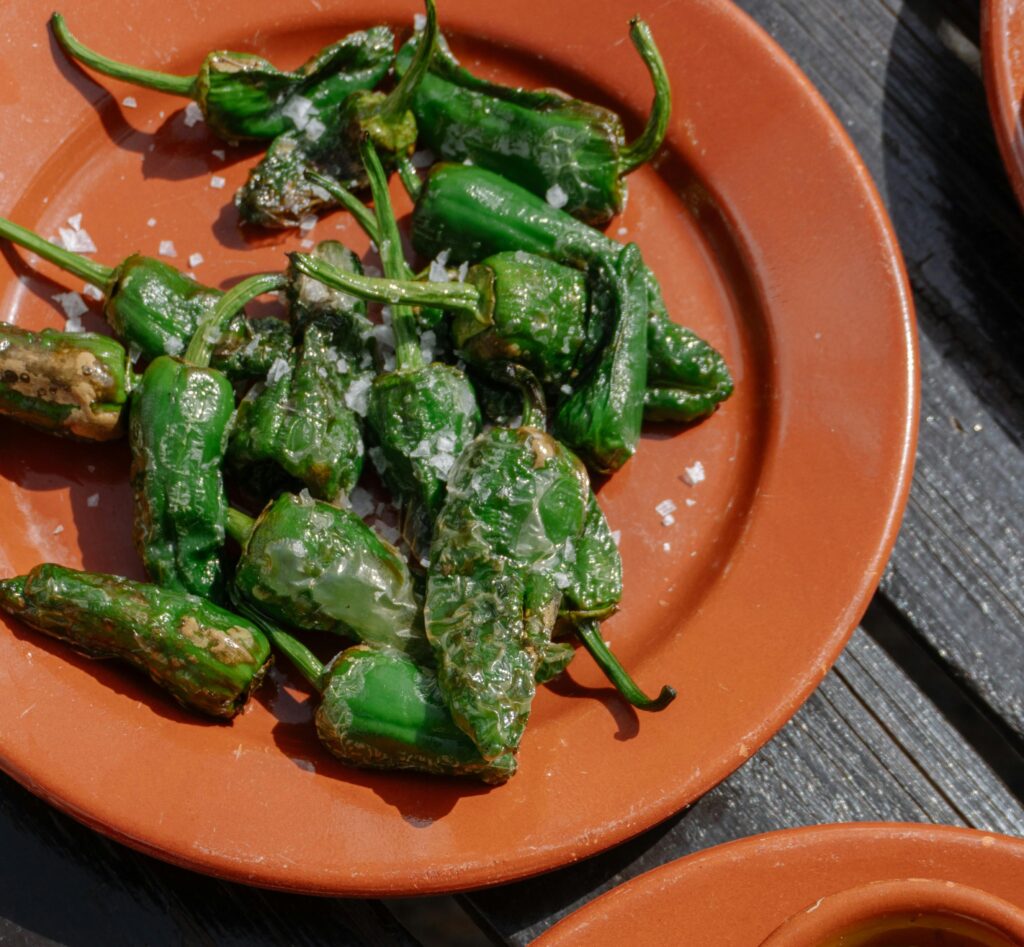
Pimientos de Padrón – The Roulette Peppers
Padrón is the penultimate stop before Santiago – the town where Saint James’s body allegedly came ashore – and it lends its name to one of Galicia’s most beloved dishes. Pimientos de Padrón, or Padrón peppers, are small green peppers blistered in olive oil and finished with coarse sea salt. Most are mild. But one in every ten or so is properly hot, and you never know which one until you bite into it. Ordering a plate is a small act of collective suspense at the table. They’re perfect with a cold drink and a rest day afternoon.
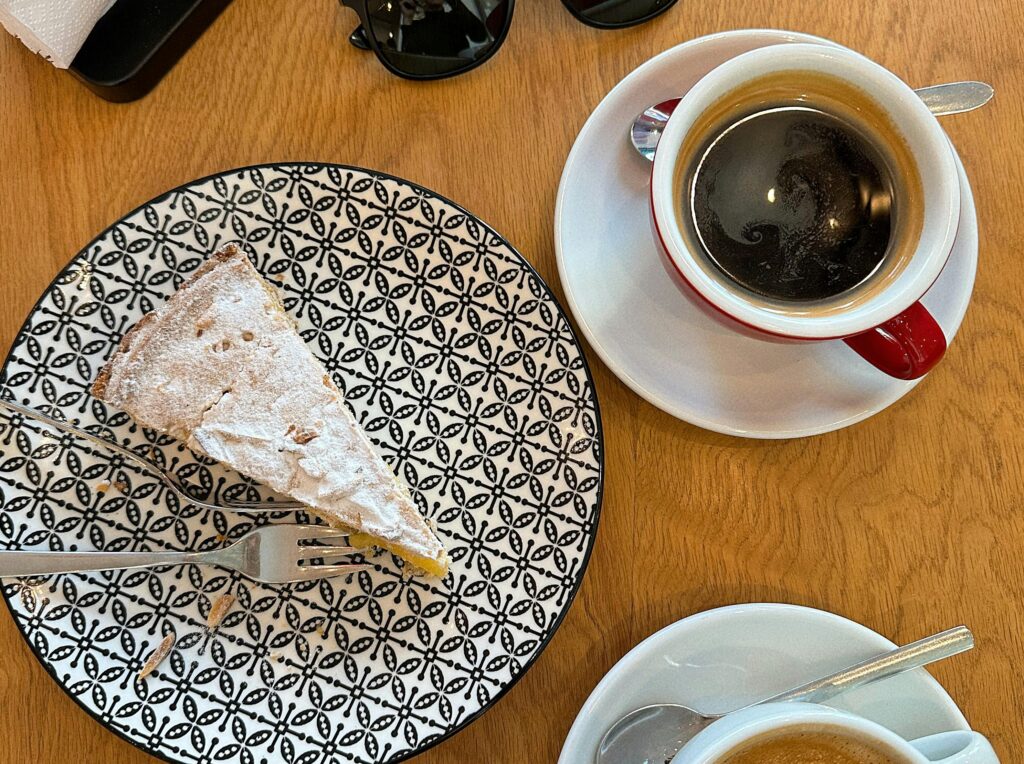
Tarta de Santiago – The Arrival Cake
The tarta de Santiago is an almond cake, dense and fragrant, dusted with icing sugar and marked with the cross of Saint James. It’s sold in every bakery and café in Santiago de Compostela, and eating a slice after collecting your Compostela is as close to a Camino tradition as the walk has. The flavour is simple – almonds, sugar, lemon zest – and the texture is somewhere between a cake and a frangipane. It’s not showy. It doesn’t need to be.
Camino Português Food: A Note on the Pilgrim Menu
Almost every restaurant and bar along the Camino Português offers a menú del perégrino, usually from noon – a set pilgrim menu, typically three courses with bread, water, and a drink included, for €10–15. The quality varies but it’s almost always good value, and on long walking days it’s exactly what you want: soup or salad to start, a substantial main of fish or meat, and sometimes a simple dessert. Lunch, not dinner, is the main meal of the day in both Portugal and Spain – embrace that rhythm and your wallet will thank you.
Read Next
- Camino Português: The Complete Guide
- How Much Does the Camino de Santiago Cost?
- Camino Português in March – What to Honestly Expect
- Camino de Santiago Packing List: The Definitive Guide
Bom Caminho. 🌟