Spiritual Variant Camino Português – Complete Guide (2026)
Most pilgrims on the Camino Português walk straight through Pontevedra and continue south toward Padrón on the standard Central Route. The Spiritual Variant Camino Português is the road less taken – a detour that adds a day, demands more of your legs, and gives back something that’s genuinely hard to name. I took it in March 2026 without quite knowing what I was getting into, and it turned out to be amongst the most quietly profound and memorable stretches I’ve done on any Camino.
Let’s delve into it.
What Is the Spiritual Variant of the Camino Português?
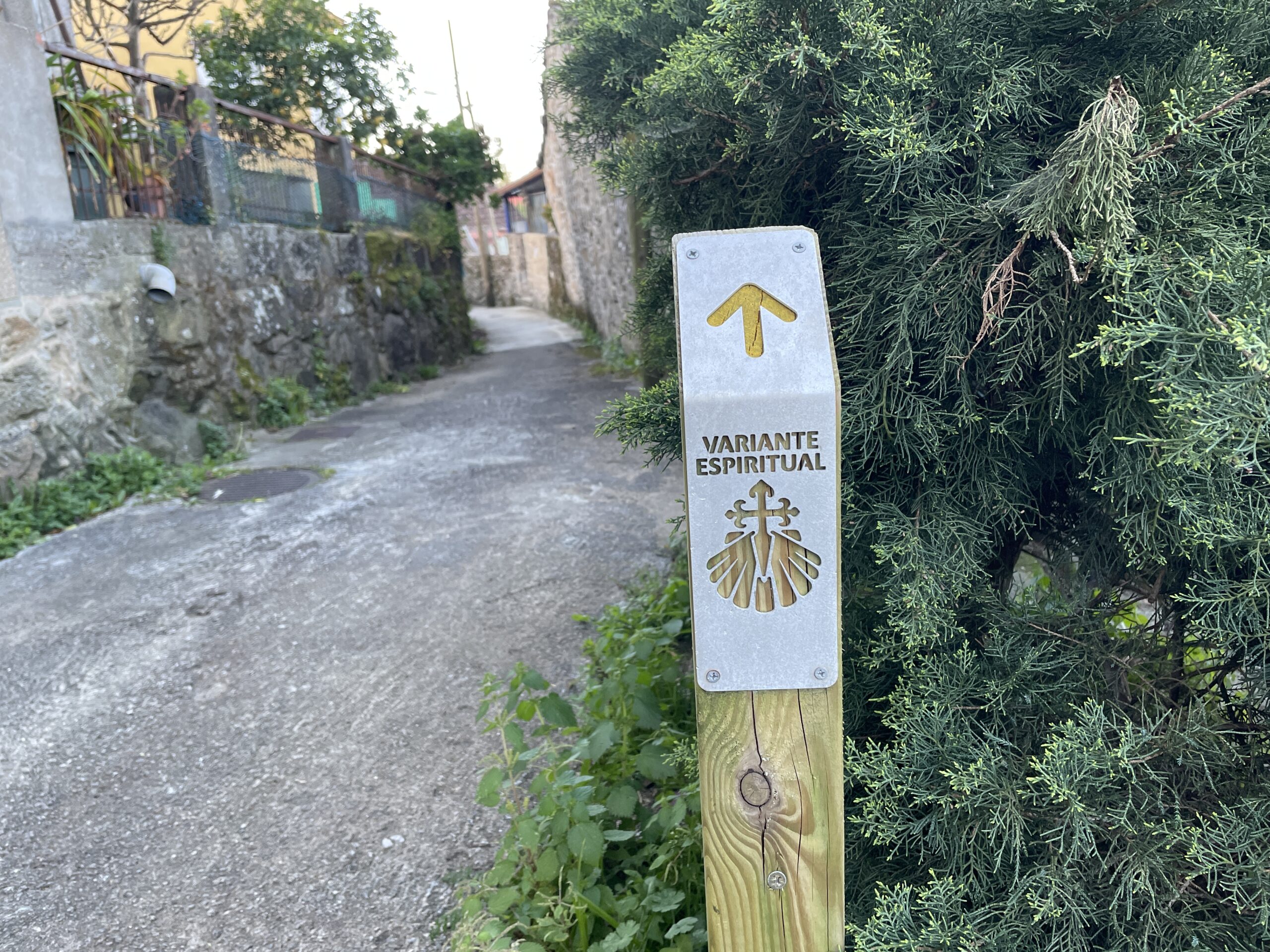
The Spiritual Variant – Variante Espiritual in Spanish – diverges from the main path about 3km north of Pontevedra and traces a route of genuine historical weight. It follows the Traslatio: the legendary path taken by the disciples of Saint James when they transported his remains by boat from Jerusalem to Galicia after his beheading in 44 AD.
The Spiritual Variant retraces that journey, on foot and then by water, and the boat crossing along the Río Ulla to Padrón is lined with 17 ancient stone crosses marking the maritime Way of the Cross – the only one of its kind in the world.
This makes the Spiritual Variant, in the eyes of many pilgrims, the most historically significant stretch of any Camino route – being the origin of the whole thing. Whether you hold the legend literally or not, I gotta admit, there’s something in walking it that feels different to the standard route – quieter, older, less worn smooth by tourist feet, more spiritual somehow.
Quick Facts
| Diverges from main route | 3km north of Pontevedra |
| Rejoins main route | Pontecesures, just outside Padrón |
| Walking distance | Approx. 45km over two days on foot |
| Boat crossing | Vilanova de Arousa → Pontecesures, approx. 90 minutes |
| Boat cost | Approx. €30. Book ahead – spaces limited, tide-dependent |
| Extra time needed | Approximately 1 extra day vs the standard route |
| Difficulty | More demanding than the standard route – steep climb on day one |
| Compostela | Not affected – you qualify regardless of which route you take |
The Stages
Stage 1 – Pontevedra to Armenteira (21km)
The route passes first through Combarro – a small coastal village of granite horreos (raised granaries) overlooking the Arousa estuary, worth arriving early enough to wander before the tourist coaches do – and then begins a long, steep climb to Armenteira. Expect around 600m of elevation gain in total. It’s the hardest physical day of the Spiritual Variant, and the reward at the top is the beautiful Mosteiro de Armenteira (more on that below as it deserves its own section).
Stage 2 – Armenteira to Vilanova de Arousa (24km)
This is the day that surprised me most. The Ruta da Pedra e da Auga – the Stone and Water Route – follows the Armenteira River down through ancient woodland, past old watermills half-swallowed by moss, under tree canopy so thick that the light arrives in fragments. Small waterfalls, stone bridges, the sound of moving water the whole way. It’s one of the most beautiful stretches of walking I’ve done anywhere. The path eventually opens into vineyards as the Arousa estuary comes into view and the landscape shifts into something coastal and golden.
Stage 3 – The Boat from Vilanova de Arousa to Pontecesures
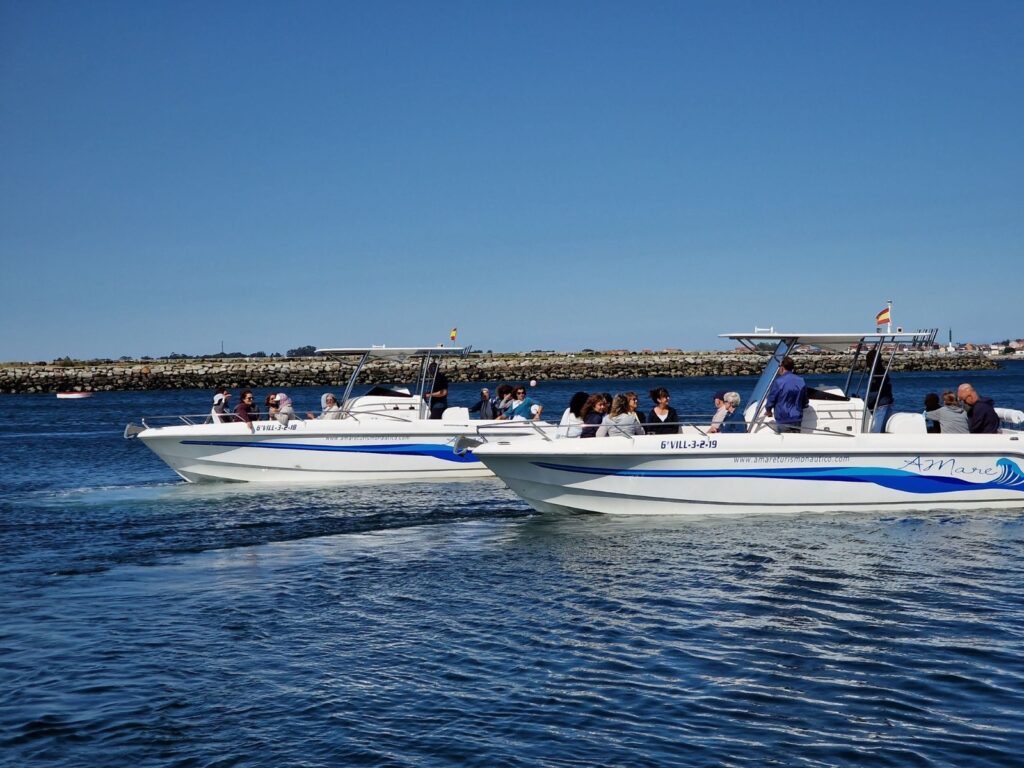
Most pilgrims take the boat rather than walking the coastal alternative (which is around 33km and reportedly uninspiring). The crossing takes about 90 minutes along the Río Ulla, and from Pontecesures it’s a 2km walk into Padrón, from where the standard Camino Português continues to Santiago.
The Mosteiro de Armenteira
My visit in March 2026 was such a memorable and profound experience that I’m dedicating its own section here in this article. The Mosteiro de Armenteira is an active Cistercian monastery, built in the 12th century and still inhabited by nuns.
Within the Mosteiro is a guesthouse run by the sisters and a wonderful little shop where you can purchase soaps and creams handmade by the sisters (I highly recommend the beautifully scented rose soap – my only regret is not buying more, added backpack weight be damned). There is also a chapel where pilgrims can attend the pilgrims’ blessing each evening at 7pm, and a truly stunning and powerful Iglesia with a statue of the Virgin Mary, that I stood in front of longer than I expected to.
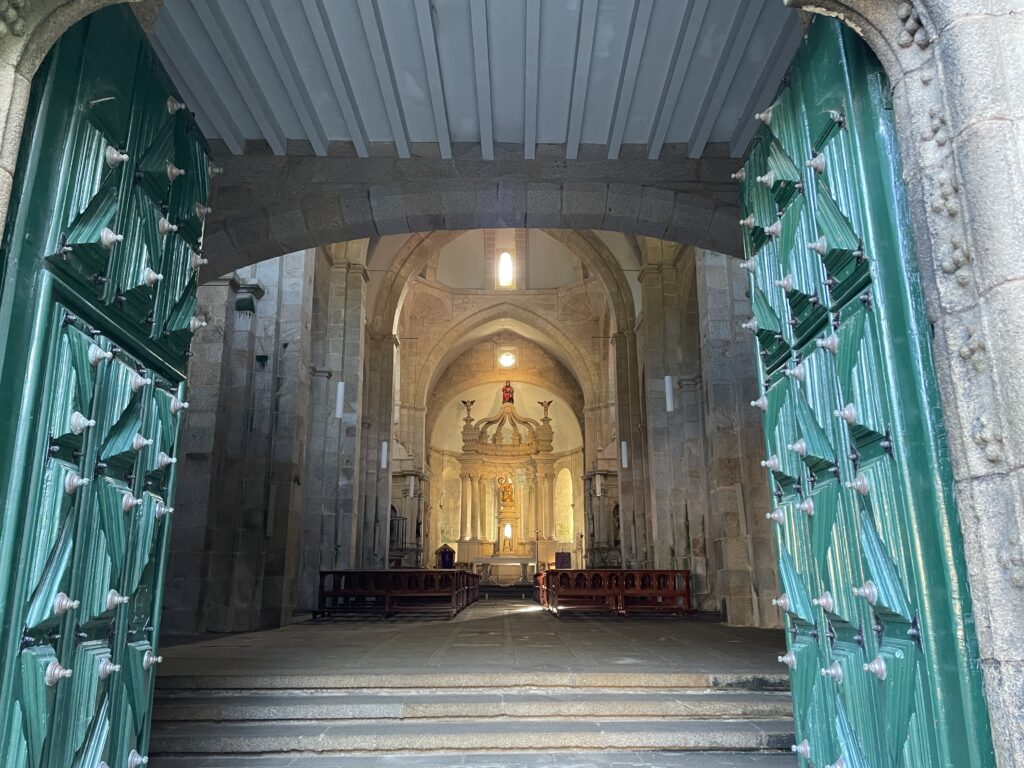
The atmosphere of peace in the Mosteiro was so complete and permeating, I found that my mind was quiet and free of its usual ruminating worries. If you have any interest in monastic architecture, Cistercian history, or simply in what it feels like to spend a night somewhere genuinely ancient and peaceful, I cannot recommend it more. If you’re planning to stay overnight, be sure to book in advance as there are only a small handful of rooms.
Read more about my 2 nights’ stay at the Mosteiro de Armenteira’s guesthouse
The Boat Crossing: Honest Expectations
The boat is the thing people most want to know about, so I’ll be direct: yes it’s historically and spiritually significant and you shouldn’t miss it, but physically (depending on the weather) it can be uncomfortable to downright unpleasant.
It’s an open-aired boat, so expect a lot of wind. When I did the crossing in March the weather was cold, and the icy wind in my face for an hour straight was amongst my least favourite experiences of the Camino Português. I’d imagine the summer months would be much kinder with the warmer weather though.
Practical things to know:
- Book in advance. The main operator is La Barca del Peregrino. Departures are limited and tide-dependent – schedules can shift without much notice.
- Bring a warm, windproof layer regardless of the season. It’s a river crossing on open water. Even in May it can be cool, and the winds are wretched.
- Your Compostela is unaffected. You qualify regardless of whether you take the boat or walk, and the boat issues its own stamp for your Credencial.
- The walking alternative is not recommended. Around 33km of coastal road walking. Unless you’re on a tight budget, just take the boat.
Is the Spiritual Variant Camino Português Worth It?
For the right pilgrim, unequivocally yes. If you have an extra day, if you value solitude and historical depth over company and infrastructure, if you’re drawn to the idea of walking something older and less worn – the Spiritual Variant will give you all of that and more. The Ruta da Pedra e da Auga alone is worth the detour. The monastery is a must-visit, and I’d highly recommend staying a night or two there if your schedule and budget allows.
If you’re tight on time, finding the walking physically hard, or walking in peak season specifically for the social atmosphere of the main route – stay on the Central Route. There’s no wrong choice. But if something in you is drawn to the Spiritual Variant, trust that instinct. The Camino has an uncanny way of delivering exactly what you need.
Read Next
- Camino de Santiago Guide: Everything Beginners Need to Know
- Camino Português: The Complete Guide
- Camino Português in March – What to Honestly Expect
- Camino de Santiago Packing List: The Definitive Guide
Bom Caminho. 🌟