A Guide to the Camino de Santiago Pilgrim Passport – How to Get Your Credencial and Compostela (2026)
Two pieces of paper define the official Camino experience: the Camino de Santiago pilgrim passport – known as the Credencial del Peregrino – which you carry with you and collect stamps along the route, and the Compostela, the certificate of completion you receive in Santiago. Here’s everything you need to know.
What Is the Camino de Santiago Pilgrim Passport?
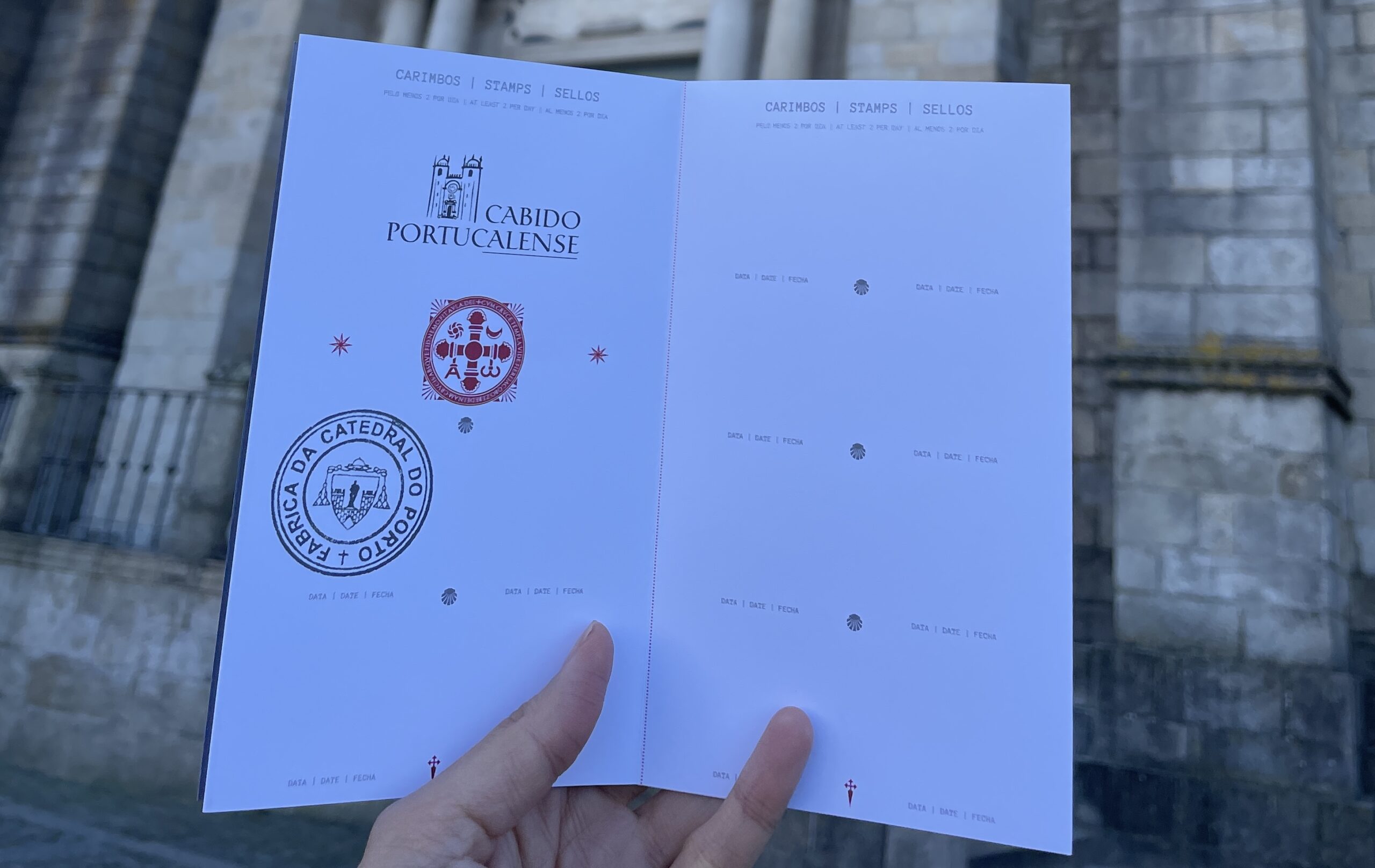
The Credencial – also called the pilgrim passport – is a small folded document that you carry throughout your Camino and collect stamps (“sellos”) in at albergues, churches, cafes, and official pilgrim offices along the route. It serves two purposes: it’s your proof of having walked the route (required to receive the Compostela), and it’s a personal record of your journey – a growing collection of stamps from every town and village you passed through. Most pilgrims keep it long after the walk as a memento.
Crucially, the Credencial is also your key to staying in pilgrim-only albergues – the most affordable accommodation on the Camino, at €5–15 per night. Without one, you’ll be limited to hotels, pensions, and private guesthouses, which are perfectly fine options but significantly more expensive. If you’re planning to use the albergue network at any point on your walk, getting a Credencial before you start is essential rather than optional.
How to Get a Pilgrim Passport
There are several ways to obtain a Credencial before or at the start of your Camino:
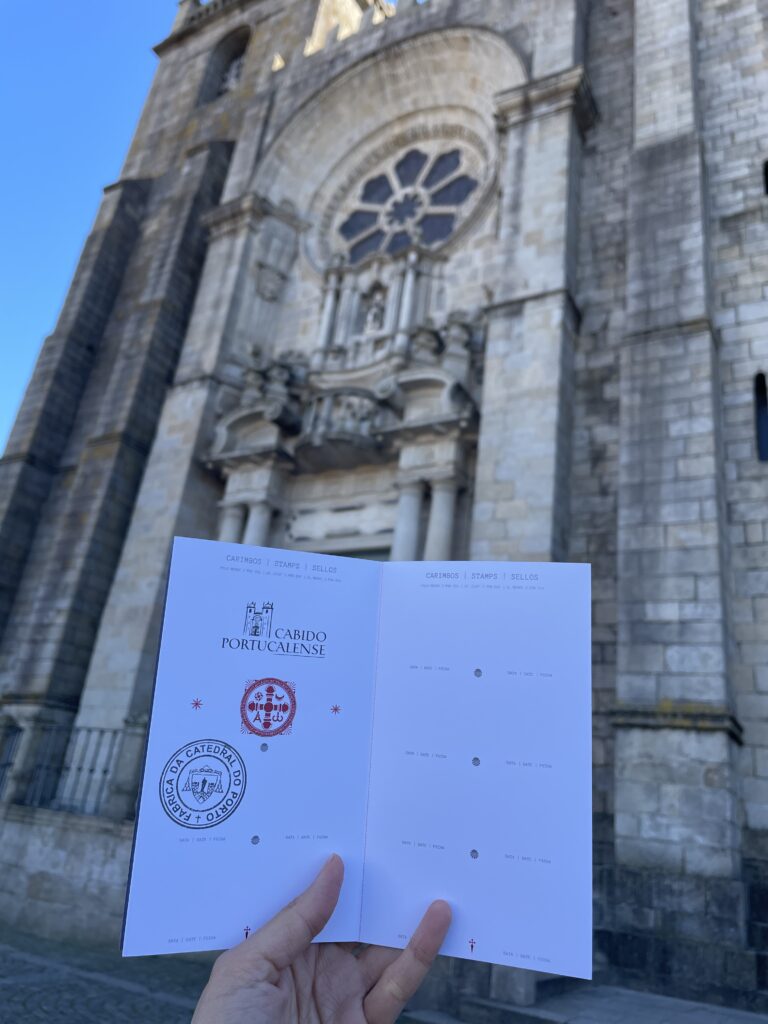
- At the starting point of your route. On the Camino Português, the Sé Cathedral in Porto issues Credencials at the pilgrim reception desk. Most starting churches and pilgrim offices on major routes do the same.
- From a Camino association before you leave. The American Pilgrims on the Camino, the Confraternity of Saint James (UK), and similar national organisations issue Credencials by post. Useful if you want to start collecting stamps from home.
- At albergues along the route. Many albergues sell or issue Credencials at check-in if you arrive without one. You won’t be turned away for not having one at the start.
Collecting Stamps: How It Works
You collect at least one stamp per day as you walk – in practice, most pilgrims collect two or three, from albergues, churches, cafes, and town halls. Stamps are generally easy to find: look for the sello sign, or simply ask at any bar or albergue along the route. For the final 100km of your route, you’ll need at least two stamps per day to receive the Compostela – make sure you don’t miss that!
What Is the Compostela?
The Compostela is the official certificate of completion issued by the Pilgrim Office in Santiago de Compostela to pilgrims who have walked at least 100km (or cycled 200km) for religious or spiritual reasons. It’s written in Latin, includes your name in its Latinised form, and for many pilgrims is one of the most meaningful things they bring home. To receive it, you present your stamped pilgrim passport at the Pilgrim Office – known as the Oficina del Peregrino – on arrival in Santiago.
How to Collect the Compostela
- Walk at least 100km. On the Camino Português, this means starting from Túi (on the Spanish border) at minimum. Most pilgrims start from Porto and walk the full 237km.
- Collect two stamps per day for the final 100km. One stamp per day is sufficient for the earlier stages.
- Go to the Oficina del Peregrino in Santiago. Located at Rua das Carretas 33, a short walk from the cathedral. Opening hours vary by season – check the official website before you arrive.
- Present your Credencial and confirm your motivation. You’ll be asked whether your motivation for walking was religious, spiritual, or cultural. Religious and spiritual motivations qualify for the Compostela. Cultural motivation qualifies for the Certificado de Distancia instead (see below).
The Certificado de Distancia
If your motivation for walking was primarily cultural rather than religious or spiritual, you’ll receive the Certificado de Distancia instead of the Compostela – a document that records the exact distance you walked. It costs €3 and is available to all pilgrims regardless of motivation. You can also request both the Compostela and the Certificado de Distancia if you qualify for the former – many pilgrims do, as the distance certificate makes a nice complement to the Compostela.
Does the Spiritual Variant Count?
Yes – taking the Spiritual Variant of the Camino Português does not affect your eligibility for the Compostela. The boat crossing counts toward your distance, and you’ll receive a stamp on board the boat for your Credencial. Read more in our
Read more at our guide to the Spiritual Variant.
Read Next
- Camino de Santiago Complete Beginner’s Guide
- Camino Português — Everything You Need to Know
- How Much Does the Camino de Santiago Cost?
- How to Train for the Camino de Santiago – A Realistic Guide
Buen Camino. 🌟