
Camino Português: The Complete Guide (2026)
The Camino Português is having a moment — and for good reason. While the classic Camino Francés remains the most walked route, savvy pilgrims are increasingly turning to the Português for its quieter paths, its extraordinary variety of landscapes, and the chance to walk through two of Europe’s most beloved cities before the trail even properly begins.
This is the second most popular Camino route in the world, with over 100,000 pilgrims completing it each year. It starts in either Lisbon or Porto, winds north through Portugal’s lush Minho region, crosses the border into Spain at the medieval bridge town of Valença, and continues through Galicia to Santiago de Compostela.
Whether you have 10 days or 25, whether you want an intimate coastal walk or a classic inland pilgrimage, the Português offers a version of the Camino that’s hard to beat. This guide covers everything you need to plan it.
Camino Português: Quick Facts
| Starting Points | Lisbon (620km) or Porto (270km) |
| End Point | Santiago de Compostela, Spain |
| Total Distance (from Porto) | Approx. 270km (central route) |
| Number of Stages (from Porto) | 12–14 stages (varies by itinerary) |
| Typical Duration (from Porto) | 10–14 days |
| Typical Duration (from Lisbon) | 24–28 days |
| Difficulty | Moderate. Less hilly than the Francés, some coastal stages have sandy paths. |
| Best Time to Walk | April–June, September–October. Avoid August if possible (heat and some crowds). |
| Waymarking | Good throughout — yellow arrows and scallop shell markers. Better in Spain than Portugal in some sections. |
| Route Variants | Central Route (inland) and Coastal Route (Via Litoral). Coastal highly recommended. |
| Popularity | 2nd most walked Camino globally. Less crowded than the Francés. |
Why Choose the Camino Português?
With so many Camino routes to choose from, what makes the Português stand out? Here’s why thousands of pilgrims choose it every year — and why it’s often recommended for both first-timers and those returning for their second or third Camino.
- Start in Porto or Lisbon. Two of Europe’s most beautiful and vibrant cities. You can spend a day or two exploring before you begin — adding a city break to your pilgrimage experience.
- Shorter from Porto. At just 270km from Porto, it’s perfect for those with 2 weeks rather than 4–5. You still walk through stunning countryside, cross an international border, and earn your Compostela.
- Less crowded than the Francés. Significantly fewer pilgrims, especially in Portugal. More chance to walk in peaceful solitude, better albergue availability, and a more intimate atmosphere.
- The coastal variant is exceptional. The Via Litoral hugs the Atlantic coast for much of the Portuguese section — dramatic cliffs, fishing villages, and sweeping ocean views. One of the most beautiful walking routes in Europe.
- Walk through two countries. The crossing at Valença into Tui, Spain over the old international bridge is one of the Camino’s great moments — the sense of crossing a border on foot feels genuinely significant.
- Excellent food and wine. Portugal’s Minho region is known for its vinho verde (young green wine), fresh seafood, and grilled meat. Some of the best pilgrim eating on any Camino route.
Central Route vs Coastal Route: Which Should You Walk?
The Camino Português splits into two main variants through Portugal: the Central Route (the traditional inland path) and the Coastal Route (Via Litoral), which runs along the Atlantic coast. Both rejoin in Redondela, Spain, before continuing together to Santiago.
The Central Route
The original, traditional Camino Português. Follows an ancient pilgrim road north from Porto through towns like Barcelos, Ponte de Lima, and Ponte de Barca. More historically significant, better pilgrim infrastructure, and more albergues. Some sections pass through industrial or suburban areas between towns — not always scenic, but authentically Camino.
Best for: Pilgrims who want the traditional experience, those prioritising albergue availability, and those walking in peak season when the coastal route is busier.
The Coastal Route (Via Litoral)
The star of the show. Starting from Porto’s coastal suburb of Matosinhos, the Via Litoral follows the Atlantic coast north through Póvoa de Varzim, Esposende, and Viana do Castelo before rejoining the central route. Dramatic ocean views, fishing village charm, and some of the most photographed scenery on any Camino route.
Best for: First-timers who want maximum scenery, photography enthusiasts, and those walking in spring or autumn when weather is ideal. Slightly fewer albergues than the central route — plan accommodation in advance.
The Verdict
Both routes are spectacular in their own right — the choice really comes down to what kind of experience you’re after. If you want dramatic Atlantic coastline, fishing villages, and sweeping ocean views, the Coastal Route (Via Litoral) is hard to beat. If you prefer a more historically rich, traditionally pilgrim experience with better albergue availability and more fellow walkers, the Central Route is the classic choice.
Many pilgrims starting from Porto with 10–14 days lean coastal for the scenery, while those walking in peak summer or prioritising infrastructure often prefer the central path. Honestly, you can’t go wrong with either — and some pilgrims mix both by walking the coastal section through Portugal before joining the central route in Spain.
Camino Português Stages from Porto (Central Route)
Below is the standard stage breakdown from Porto on the Central Route. Distances and stage divisions vary by guidebook — these reflect the most commonly walked itinerary.
| Stage | From | To | Distance | Notes |
| 1 | Porto (Sé Cathedral) | Vila do Conde | 27km | Long first stage. Consider splitting at Rates (21km). |
| 2 | Vila do Conde | Barcelos | 22km | Charming market town. Famous for the Barcelos cockerel legend. |
| 3 | Barcelos | Ponte de Lima | 34km | Long stage — many split at Abade de Neiva (18km). |
| 4 | Ponte de Lima | Rubiães | 22km | Beautiful Roman bridge in Ponte de Lima. One of Portugal’s most beautiful villages. |
| 5 | Rubiães | Valença | 17km | Short and lovely. Valença is a stunning fortified border town. |
| 6 | Valença | Redondela | 32km | Cross into Spain! Tui is directly across the bridge. Stunning Roman bridge crossing. |
| 7 | Redondela | Pontevedra | 19km | Galician countryside. Pontevedra is a beautiful city — worth an evening explore. |
| 8 | Pontevedra | Caldas de Reis | 21km | Gentle Galician walking through eucalyptus forests and small villages. |
| 9 | Caldas de Reis | Padrón | 18km | Padrón is where St. James’s body allegedly arrived by boat — deeply historic. |
| 10 | Padrón | Santiago de Compostela | 25km | The final stage. Emotional, beautiful, unforgettable. |
Total distance: approximately 237km over 10 stages (with some splits, most pilgrims walk this in 12–14 days).
Coastal Route (Via Litoral) Key Stages
The coastal route diverges from Porto’s coastal suburb of Matosinhos and rejoins the central route in Redondela, Spain. Here are the key stages:
| Stage | From | To | Distance | Highlights |
| 1 | Porto / Matosinhos | Póvoa de Varzim | 32km | Start at the sea. Atlantic views from the first steps. |
| 2 | Póvoa de Varzim | Esposende | 25km | Dramatic coastal cliffs, working fishing villages. |
| 3 | Esposende | Viana do Castelo | 27km | Most scenic stage. River Lima estuary views are stunning. |
| 4 | Viana do Castelo | Caminha | 24km | Beautiful riverside town of Caminha at the border. |
| 5 | Caminha | A Guarda / Redondela | varies | Cross into Spain. Route rejoins central at Redondela. |
Starting from Lisbon: Is It Worth It?
Walking the full Camino Português from Lisbon adds approximately 380km and 15–17 days to your journey. It’s a significant undertaking — but a rewarding one. The Lisbon extension takes you north through the Ribatejo and Estremadura regions of Portugal, passing through Santarém, Coimbra (one of Portugal’s great university cities), and Porto before continuing north.
The honest verdict: the Lisbon–Porto section is scenic but has more road walking than the Porto–Santiago stretch, and the infrastructure for pilgrims is thinner. Most first-timers are better served starting from Porto and saving the Lisbon extension for a return Camino.
That said, if you have 4 weeks and want the full experience of walking from one great city to another — Lisbon to Santiago — it is a magnificent journey.
Practical Information: Everything You Need to Know
Getting to Porto to Start
Porto Francisco Sá Carneiro Airport is well-connected from across Europe — Ryanair, easyJet, TAP, and others fly direct from most major cities. The metro runs directly from the airport to the city centre (Line E, Violet) in about 35 minutes for €2.60.
The traditional starting point is the Sé Cathedral in Porto’s old town — pick up your Credencial here if you haven’t already, get your first stamp, and begin.
Getting Home from Santiago
Santiago de Compostela Airport connects to Madrid, Barcelona, London, and other European cities. Alternatively, buses and trains run to Porto (4–5 hours), Vigo (1 hour), or Madrid (7 hours) for onward connections. Book return transport before you leave — flights from Santiago can be limited.
Waymarking and Navigation
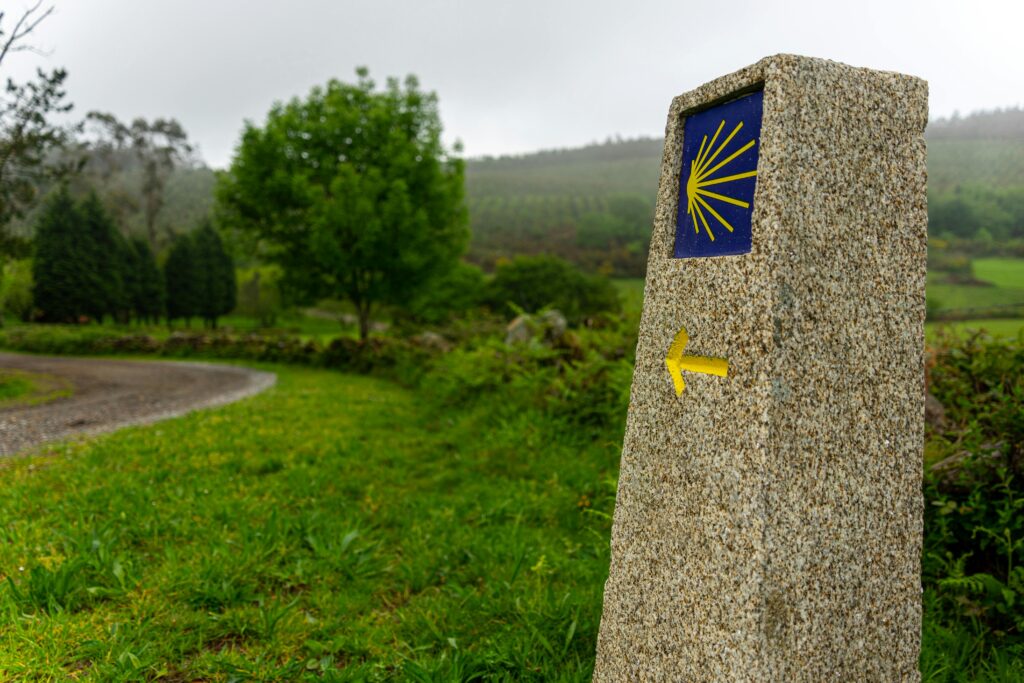
The Camino Português is well-marked with yellow arrows and blue-and-yellow scallop shell markers. Navigation is generally straightforward, though some sections through Portuguese towns and suburban areas can be confusing. The Buen Camino app (free) and Wikiloc tracks are helpful supplements. In Spain, waymarking improves significantly.
Language
You’ll walk through two countries with two languages: Portuguese and Galician/Spanish. Basic Portuguese phrases are appreciated in Portugal — locals are welcoming but English is less universal than in Spain. In Galicia, Spanish works well, and most pilgrim-facing businesses speak some English.
Key phrases: Bom Caminho (Portuguese: Good Way) / Buen Camino (Spanish). Obrigado/a (Portuguese: Thank you) / Gracias (Spanish). Um café, por favor (Portuguese: a coffee, please).
Weather and What to Expect
The Camino Português passes through one of the wettest regions of the Iberian Peninsula — the Minho in northern Portugal and Galicia in Spain are green precisely because it rains. A lot. A good waterproof jacket is non-negotiable.
- Spring (April–June): Perfect. Green landscapes, mild temperatures (15–22°C), occasional rain. Best season.
- Summer (July–August): Hot (25–35°C in Portugal), drier, busier. Start early to walk in cooler morning temperatures.
- Autumn (September–October): Excellent. Harvest season, beautiful light, manageable temperatures.
- Winter (November–March): Wet and quiet. Some albergues close. Not recommended for first-timers.
Accommodation on the Camino Português
Albergue infrastructure is good throughout, though thinner in Portugal than in the Spanish section. Private albergues are the backbone of the route — most are bookable in advance, which is advisable on the coastal route where options are more limited.
Municipal albergues exist in larger towns and are cheapest (€6–10), but walk-in only. In smaller villages, a single private albergue may be the only option — book ahead in peak season.
Book Camino Português accommodation on Booking.com
Food and Drink: Eating Your Way to Santiago
The Camino Português passes through some of the best eating and drinking territory in the Iberian Peninsula. This is not a sacrifice — it is a feast.
In Portugal
- Pastel de nata: The iconic Portuguese custard tart. Have one (or three) in Porto before you start.
- Francesinha: Porto’s famous beer-soaked meat sandwich with a spicy sauce. A genuine Porto institution.
- Bacalhau (salt cod): Portugal’s national obsession. Said to have 365 different recipes. Try it grilled with olive oil and potatoes.
- Vinho Verde: The young, slightly effervescent white wine of the Minho region. Light, refreshing, and dangerously drinkable at €1.50 a glass. The perfect end to a long day’s walk.
- Caldo Verde: Green soup made with kale and chorizo. Hearty, warming, and everywhere on the route.
In Galicia (Spain)
- Pulpo a la gallega: Galician-style octopus with olive oil, paprika and sea salt. A pilgrimage in itself.
- Caldo gallego: Galician white bean and greens soup. Perfect pilgrim fuel.
- Tarta de Santiago: Almond cake marked with the Cross of Saint James. Eat it in Santiago — you’ve earned it.
- Albariño wine: Galicia’s signature white wine — crisp, mineral, seafood-perfect.
Unmissable Highlights of the Camino Português
Porto — The Starting City
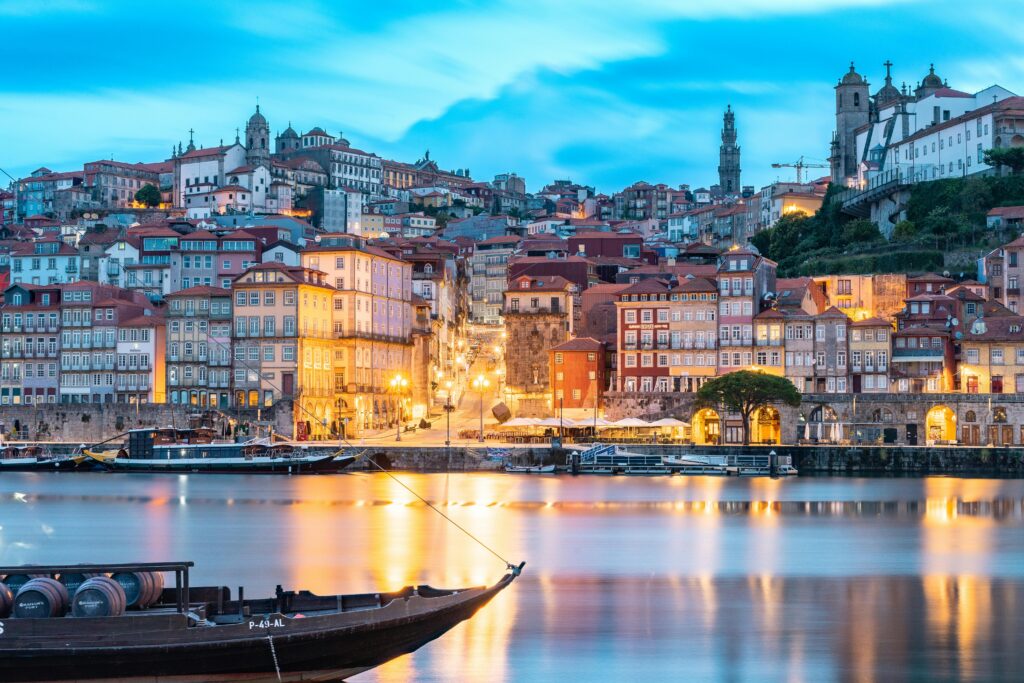
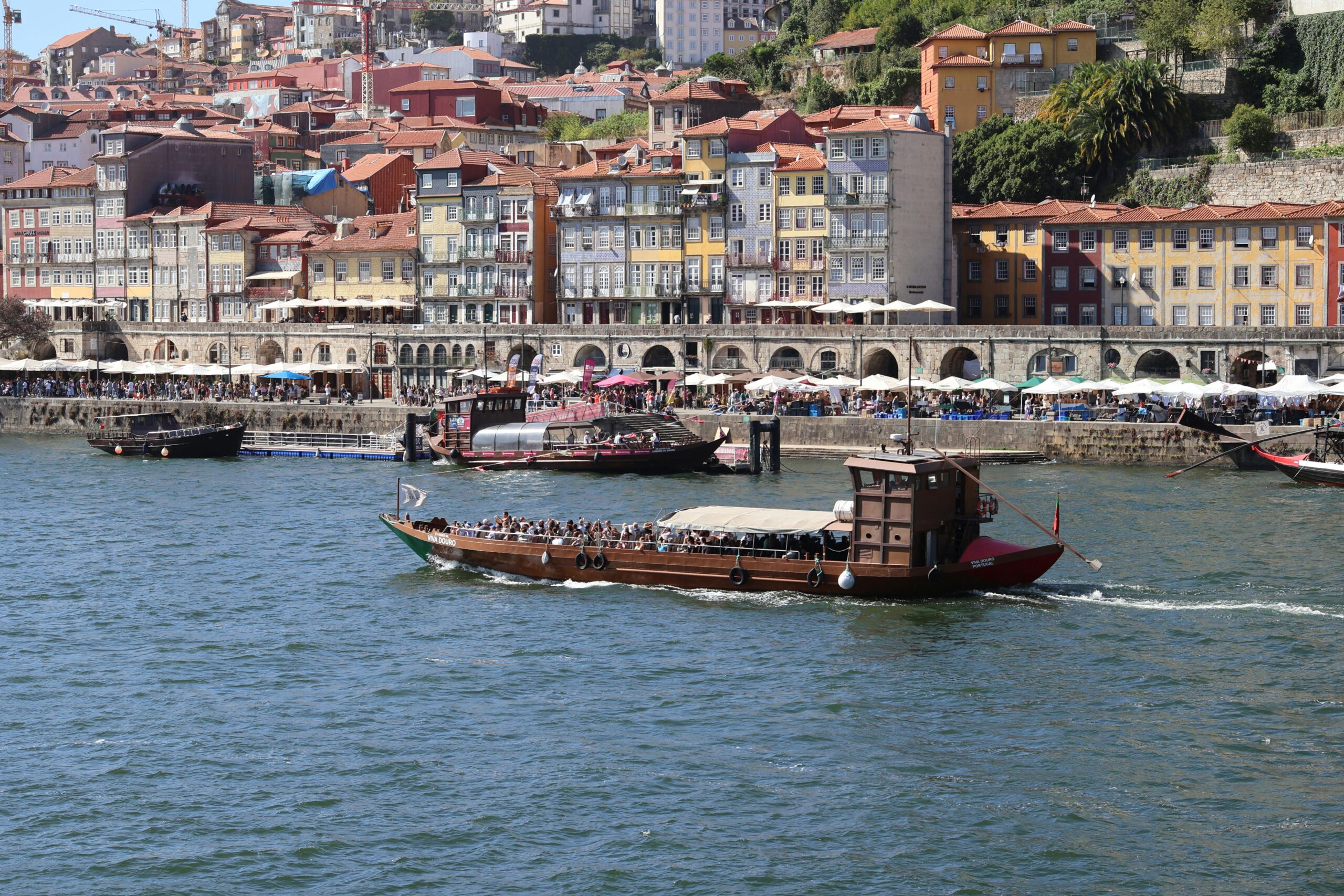
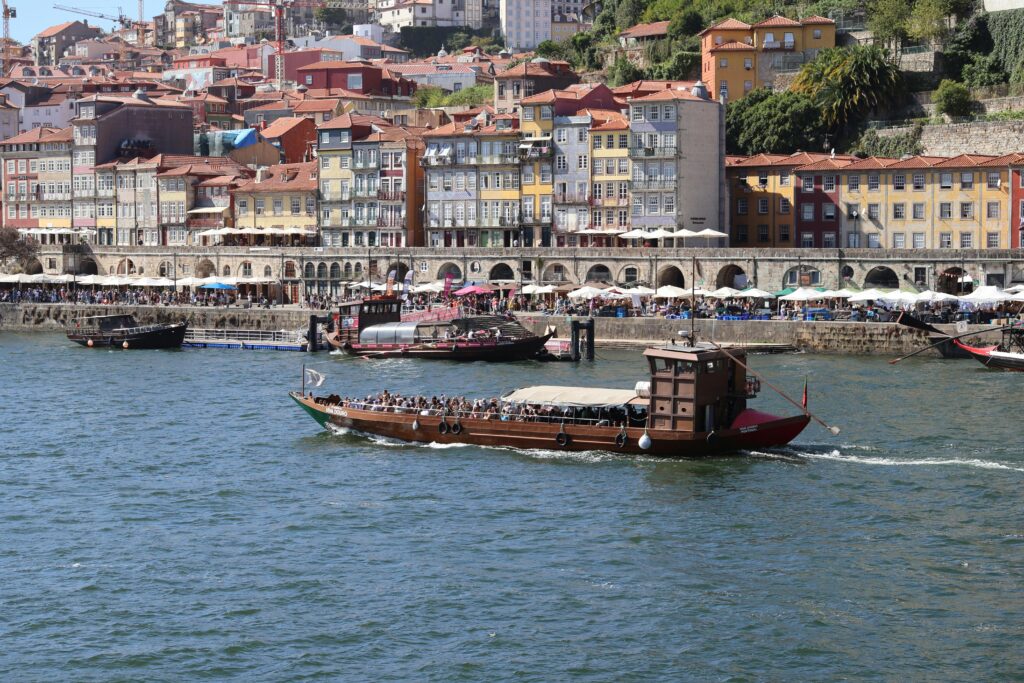
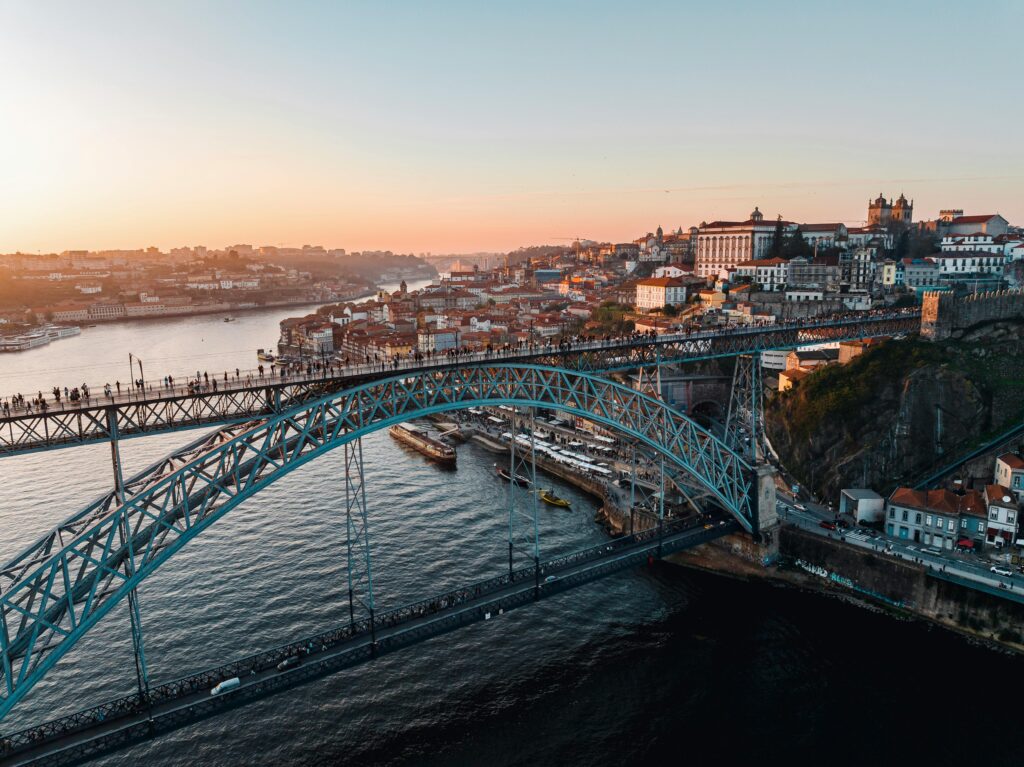
Porto deserves at least a full day before you start walking. The Ribeira riverside district, the Dom Luís I bridge views, the Livraria Lello bookshop, and the tile-covered São Bento train station are all within walking distance of the Sé Cathedral starting point. Arrive a day early and give yourself the gift of exploring this extraordinary city.
Barcelos — The Cockerel Town
The charming market town of Barcelos is home to one of Portugal’s most beloved legends — the Barcelos Cockerel, a story of divine justice and mercy that has become a symbol of Portuguese culture. The Thursday market is one of the largest in Portugal. The medieval bridge and Igreja do Senhor da Cruz are worth the walk.
Ponte de Lima — Portugal’s Oldest Town
Often called Portugal’s most beautiful village, Ponte de Lima sits on the banks of the River Lima with a stunning medieval bridge that pilgrims have crossed for centuries. The town’s charm is extraordinary — linger here if you can afford a slow afternoon.
Valença / Tui — The Border Crossing
The crossing from Portugal into Spain at Valença is one of the Camino’s great emotional moments. The fortified old town of Valença sits high above the Miño river, connected to the Spanish town of Tui by a magnificent 19th-century iron bridge. Walking across it — leaving one country and entering another on foot — feels exactly as significant as it sounds.
Pontevedra — A City Worth Savouring
Pontevedra’s car-free old town is one of Galicia’s great pleasures — a labyrinth of granite streets, tapas bars, and pilgrim camaraderie. The city is large enough to have excellent restaurants and small enough to feel intimate. Many pilgrims take a rest day here.
Padrón — Where the Journey Began
According to tradition, the boat carrying the body of Saint James came ashore at Padrón. The church of Santiago contains the stone mooring post the boat was tied to — a deeply moving stop for pilgrims of all faiths and none. The final stage from Padrón to Santiago is 25km of mounting anticipation.
Santiago de Compostela — The End of the World
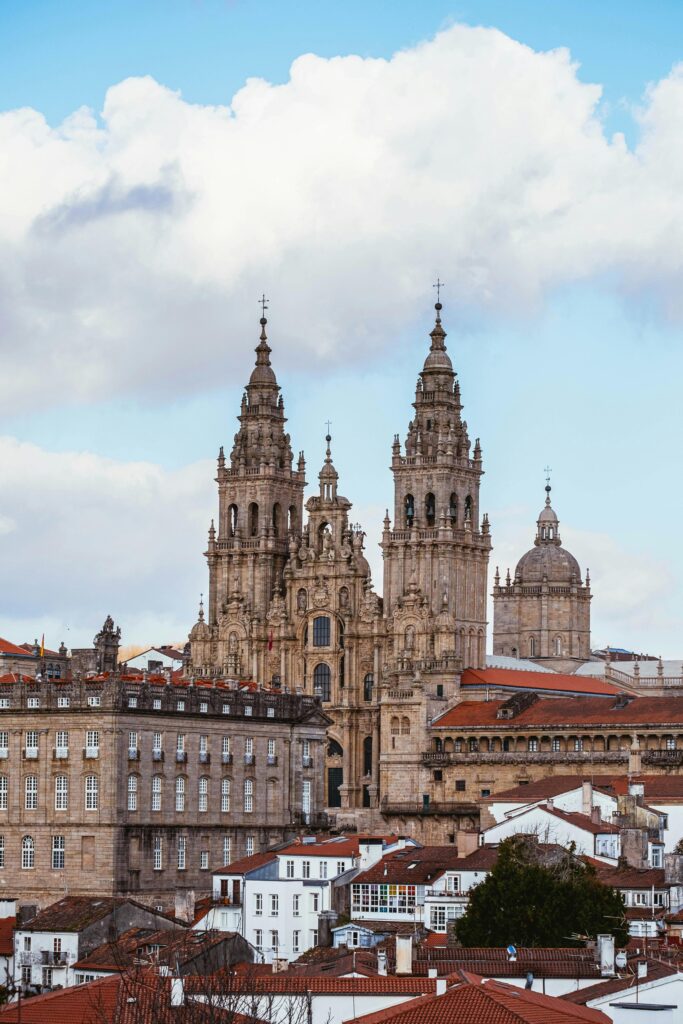
Nothing prepares you for your first sight of the cathedral towers rising above the rooftops of Santiago. The Praza do Obradoiro — the great square in front of the cathedral — is where pilgrims collapse, cry, embrace, and sit in stunned silence having walked hundreds of kilometres to reach this moment. Collect your Compostela at the Pilgrim Office, attend the Pilgrim Mass, and give yourself at least two full days in this extraordinary city before heading home.
Frequently Asked Questions
Is the Camino Português good for beginners?
Yes — it’s one of the best routes for first-timers. The shorter distance from Porto (270km vs 780km for the full Francés), good infrastructure, and moderate terrain make it very accessible. The well-marked path and frequent towns mean you’re never far from help or a coffee.
Do I need to book accommodation in advance?
On the central route in low season (April–June, September–October), you can largely walk-in. On the coastal route and in peak summer, booking 1–2 stages ahead is advisable — especially for private rooms. The last 100km into Santiago gets busy year-round and advance booking is recommended.
Can I walk the Camino Português solo?
Absolutely. Solo pilgrims are the norm rather than the exception. The Camino community forms naturally on the trail — you’ll meet fellow pilgrims within the first day and likely walk with some of them all the way to Santiago.
How difficult is the Camino Português physically?
Moderate. Less mountainous than the Camino Francés or Primitivo, though the coastal route has some sandy beach sections that are surprisingly tiring. The main physical challenge, as on any Camino, is cumulative — it’s not the distance in a single day but the daily repetition over two weeks. A basic 6–8 week walking training plan is recommended.
What does the Compostela certificate say?
The Compostela is issued in Latin and records your name and the fact that you completed the pilgrimage for religious or spiritual reasons. If you walk for non-religious reasons, you can request a Certificado de Distancia instead, which records the distance walked.
Is the Camino Português worth it compared to the Camino Francés?
They offer genuinely different experiences. The Francés has more pilgrims, more established infrastructure, and the iconic meseta (high plains) experience. The Português is quieter, coastal, and passes through Portugal as well as Spain — a bonus two-country adventure. For those with limited time, the Português from Porto is excellent value: a complete, deeply satisfying Camino in 10–14 days.
Ready to Walk the Camino Português?
The Camino Português is waiting — and so is Porto, and the Atlantic coast, and the vinho verde, and Valença in the evening light, and that moment in the Praza do Obradoiro when you realise you’ve actually done it.
Start planning with our other guides:
- Camino de Santiago Complete Beginner’s Guide
- Camino de Santiago Packing List
- How Much Does the Camino de Santiago Cost?
Bom Caminho. 🌟